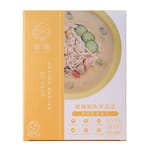
This category page features various Ban Ban Daily Feast cat canned food products, typically presented as wet food to meet the daily dietary needs of cats. The contents of these cat canned foods often include meat, fish, and their by-products, potentially supplemented with vitamins, minerals, and other nutritional components. Product forms encompass mousse, pate, chunks, or shredded meat, suitable for cats of different ages and dietary preferences. Ban Ban Daily Feast cat canned food packaging is usually designed as easy-open cans or foil pouches, facilitating storage and feeding. These products serve as a main meal or snack for cats, providing hydration and protein sources, and are a common choice in pet diets. Users can select appropriate Ban Ban Daily Feast cat canned food items based on their cats' specific requirements.
The category of prepared cat food pouches refers to commercially manufactured cat food products contained within flexible, sealed packaging, designed for single or multiple servings.
This article aims to provide a descriptive overview of the prepared cat food pouch category, focusing on its structural attributes, material composition, and usage contexts. It does not offer product recommendations or comparative evaluations of specific items.
Prepared Cat Food Pouches: Common Divisions
Prepared cat food pouches are commonly divided based on their primary function within a cat's diet: complete and balanced meals versus complementary feeding. Complete and balanced meals are formulated to meet all nutritional requirements for a cat's life stage, adhering to established nutritional profiles such as those set by the Association of American Feed Control Officials (AAFCO) or the European Pet Food Industry Federation (FEDIAF). These products typically contain a comprehensive blend of proteins, fats, carbohydrates, vitamins, and minerals. Conversely, complementary feeding products, often referred to as toppers or treats, are not designed to be the sole source of nutrition. They are intended to supplement a primary diet, provide additional hydration, or serve as an occasional indulgence. Their formulations may emphasize specific ingredients, textures, or flavor profiles without necessarily meeting full nutritional standards. Another practical division occurs based on the target life stage of the feline, with formulations specifically designed for kittens, adult cats, or senior cats, reflecting their differing metabolic and physiological needs. Specialized formulations for specific health conditions, such as urinary tract health or weight management, also form distinct sub-categories within prepared cat food pouches.
Prepared Cat Food Pouches: Material Composition and Processing Techniques
The material composition and processing techniques employed in the production of prepared cat food pouches are central to their characteristics. Protein sources typically include various meats such as chicken, beef, lamb, and fish (e.g., salmon, tuna, mackerel), often in combination. These proteins can be present as muscle meat, organs, or rendered meal derivatives. Carbohydrate components, when included, might consist of grains like rice or oats, or grain-free alternatives such as peas, sweet potatoes, or tapioca. Fats are incorporated for energy and essential fatty acids, commonly sourced from animal fats (e.g., chicken fat) or plant oils (e.g., sunflower oil, flaxseed oil). Vitamins and minerals are added to ensure nutritional completeness, often in the form of premixes. Water constitutes a significant portion of the product's mass, contributing to its moisture content. The structural forms can range from pâtés, which are finely ground and homogeneous, to shredded or chunky preparations, where larger pieces of meat or fish are discernible. Gravy or jelly formulations encapsulate these solid components within a liquid matrix. Manufacturing processes for prepared cat food pouches typically involve blending raw ingredients, cooking (often via retort sterilization to achieve commercial sterility and extend shelf life), and then packaging into multi-layer flexible pouches. These pouches are constructed from materials such as polyethylene, polypropylene, and aluminum foil, which provide barrier properties against oxygen, moisture, and light, preserving the product's integrity without refrigeration until opened. The cooking method influences nutrient retention and palatability attributes.
Prepared Cat Food Pouches: Usage Environments and Conditions
The properties of prepared cat food pouches vary across different usage environments and conditions, primarily concerning storage, serving, and disposal. Unopened pouches are shelf-stable and can be stored at ambient room temperature, typically between 10°C and 30°C, away from direct sunlight or extreme temperature fluctuations. This characteristic makes them suitable for various domestic storage situations, including pantries or cupboards, without requiring refrigeration. Once a pouch is opened, its contents become susceptible to microbial growth and oxidation. Therefore, any unused portion must be refrigerated promptly, usually within 2 hours of opening, and consumed within a specified timeframe, typically 24 to 72 hours, to maintain product safety and quality. The relatively small, single-serving nature of many prepared cat food pouches minimizes waste and simplifies portion control, which is beneficial in multi-cat households or for cats with specific dietary requirements. The flexible packaging also facilitates easy dispensing, requiring no additional tools for opening or serving. Disposal of the empty pouch typically involves placing it with general household waste, though some regions may have specific recycling programs for multi-layer flexible packaging, contingent on local recycling infrastructure and material separation capabilities. The physical integrity of the pouch material is designed to withstand typical handling during transport and storage, preventing leakage or contamination under normal conditions.
Prepared Cat Food Pouches: Product Characteristics from Sales Ranking
Based on the provided sales ranking, we can examine the material, formula, and structural characteristics of the top product in the prepared cat food pouches category.
Rank 1: Companion's Daily Delights Cat Fresh Food Pouch Tender Chicken Salmon with Melon Chicken Breast + Salmon 120g (BBC-0061) — This product is characterized by its blend of chicken breast and salmon as primary protein sources. The inclusion of "melon" suggests the presence of a fruit or vegetable component, potentially for fiber or additional nutrient content. The "tender" descriptor indicates a specific texture, likely involving soft, easily digestible pieces of meat. The formulation is presented as a "fresh food pouch," which often implies a focus on minimally processed ingredients and a high moisture content, aligning with the typical structure of prepared cat food pouches. The 120g unit size indicates an individual serving or a portion suitable for a single meal for an adult cat, depending on dietary needs. The combination of chicken and salmon offers a dual-protein profile. The "chicken breast" specifies a lean cut of poultry, while "salmon" provides omega-3 fatty acids. The term "Companion's Daily Delights" functions as a brand identifier.
Prepared Cat Food Pouches: Quality Standards and Labeling Norms
Quality standards and labeling transparency are fundamental aspects of the prepared cat food pouches category. In regions such as the United States, pet food products, including prepared cat food pouches, are subject to regulations enforced by the Food and Drug Administration (FDA) and state feed control officials, often guided by AAFCO recommendations. AAFCO provides model regulations for pet food labeling and ingredient definitions, which many states adopt into their own laws. Key labeling requirements include a guaranteed analysis, which specifies minimum percentages of crude protein and crude fat, and maximum percentages of crude fiber and moisture. The ingredient list must be provided in descending order by weight, allowing consumers to discern the primary components. Nutritional adequacy statements are crucial, indicating whether the product is formulated to meet the nutritional levels established by AAFCO for a specific life stage (e.g., "for all life stages," "for adult maintenance," "for growth and reproduction") or if it is intended for intermittent or supplemental feeding only. Manufacturers are also typically required to provide feeding guidelines, contact information, and occasionally, lot numbers for traceability. In the European Union, pet food is regulated under specific directives that mandate similar detailed labeling, including ingredient lists, analytical constituents, additives, and feeding instructions. The term "complete feed" or "complementary feed" must be clearly stated. Verification of quality often involves adherence to Good Manufacturing Practices (GMPs) and hazard analysis and critical control points (HACCP) principles during production. Third-party certifications, while not universally mandatory, can provide additional assurance regarding ingredient sourcing, manufacturing processes, and product quality for prepared cat food pouches. Such certifications often involve independent audits and testing.
Prepared Cat Food Pouches: Verifiable Factual Insights
A verifiable factual insight regarding prepared cat food pouches is that the retort sterilization process, commonly used in their manufacturing, involves heating the sealed pouches under pressure to temperatures typically exceeding 100°C for a specific duration. This process effectively kills spoilage microorganisms and pathogenic bacteria, rendering the product commercially sterile and enabling its long shelf life at ambient temperatures without chemical preservatives. This is a critical factor distinguishing these products from fresh or refrigerated pet foods. Another insight related to prepared cat food pouches is that the packaging material, a multi-layer laminate, is engineered to provide specific barrier properties. The aluminum foil layer, often present, acts as an impermeable barrier to oxygen, moisture, and light, which are primary factors contributing to product degradation. Polyethylene and polypropylene layers provide structural integrity, heat-sealability, and an inert contact surface for the food. This engineered complexity of the packaging directly contributes to the preservation of nutritional content and prevents spoilage over extended periods for prepared cat food pouches.
The preceding discussion has delineated various aspects of prepared cat food pouches, including their classifications, material compositions, processing methods, and relevant regulatory standards. The objective has been to present objective information regarding the structure and characteristics of this product category.
......View All