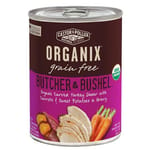
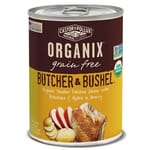
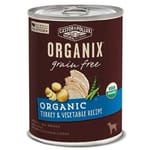
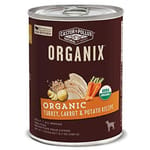
Canned dog food represents a common form of canine nutrition, typically presented as wet food. Its contents are diverse, often including meat, vegetables, and grains, processed and sealed within metal cans. The texture of canned dog food can vary, appearing as chunks, pâté, minced, or mixed forms, offering a range of palatability options. These products generally possess a relatively long shelf life before opening, but require refrigeration and prompt consumption once opened. Canned dog food can be served as a primary meal or mixed with dry kibble to enhance dietary variety for dogs. Different formulations of canned dog food are tailored to specific canine requirements, such as specialized recipes for puppies, adult dogs, or senior dogs, or nutritional profiles designed for varying activity levels. The packaging sizes for canned dog food also vary, ranging from small single-serving portions to larger multi-serving containers.
Dog wet food, often presented in hermetically sealed containers, represents a distinct category of prepared canine nutrition designed for extended shelf life and ready consumption.
This article aims to delineate the structural attributes, material composition, formulation methods, and classification parameters prevalent within the dog wet food category, without engaging in product recommendations or comparative evaluations of specific offerings.
Dog Wet Food: Common Classification Structures
The classification of dog wet food is frequently organized around several primary axes, reflecting distinct attributes that influence their composition and intended application. One prevalent method of classification distinguishes products based on their primary protein source. This often includes categories such as poultry-based formulas (e.g., chicken, turkey), red meat-based formulas (e.g., beef, lamb), and sometimes fish-based options. Each protein source contributes a unique amino acid profile and palatability characteristic to the dog wet food. Another significant classification criterion involves the inclusion or exclusion of specific dietary components, most notably grains. Grain-inclusive dog wet food typically contains ingredients like rice, corn, or wheat, providing carbohydrates for energy. Conversely, grain-free dog wet food formulations omit these ingredients, often substituting them with alternative carbohydrate sources such as potatoes, sweet potatoes, or peas. This distinction is often relevant for dogs with specific dietary sensitivities or for owners preferring grain-free diets. Furthermore, dog wet food can be classified by its intended life stage, such as puppy formulas, adult maintenance formulas, and senior formulas. These life-stage specific classifications reflect variations in nutrient density, caloric content, and ingredient ratios tailored to the metabolic requirements of dogs at different developmental stages. Puppy formulas, for example, typically contain higher protein and fat levels to support growth, while senior formulas might focus on ingredients that support joint health or digestibility. The format of the dog wet food also serves as a classification element, distinguishing between pâté-style, shredded, chunky, or stew-like preparations. These textural differences are achieved through varied processing techniques and ingredient choices, influencing the palatability and feeding experience for the canine consumer. Organic dog wet food constitutes another classification, defined by adherence to specific agricultural and processing standards that regulate ingredient sourcing and manufacturing practices. These standards typically prohibit synthetic pesticides, fertilizers, and genetically modified organisms, aiming for a product derived from organically farmed sources. This systematic approach to categorizing dog wet food provides a structured framework for understanding the diverse offerings within the market.
Dog Wet Food: Material Composition and Processing Techniques
The material composition of dog wet food is a fundamental aspect that dictates its nutritional profile and physical characteristics. Proteins form the cornerstone of these formulations, typically sourced from various animal tissues. Common protein sources include muscle meat, organ meats, and sometimes meat by-products, all contributing essential amino acids. The specific type and proportion of protein dictate much of the nutritional value and flavor profile of the dog wet food. Fats, another critical component, are incorporated to provide concentrated energy and essential fatty acids, such as omega-3 and omega-6. These fats can originate from animal sources, like chicken fat or salmon oil, or from plant sources, such as sunflower oil or flaxseed oil. Carbohydrates, while sometimes omitted in grain-free variants, are often present to supply readily available energy. These can be sourced from grains like rice, barley, or oats, or from alternative sources such as potatoes, sweet potatoes, and legumes. Vegetables and fruits are frequently included for their vitamin, mineral, and fiber content. Examples include carrots, peas, green beans, apples, and cranberries. These ingredients contribute to overall nutritional balance and can aid in digestive health. Vitamins and minerals, often added as supplements, ensure that the dog wet food provides a complete and balanced diet according to established nutritional guidelines. Water is a primary component by weight, contributing to the moisture content characteristic of wet food and aiding in hydration. The processing techniques involved in manufacturing dog wet food are crucial for both preservation and nutrient availability. The most common method is thermal processing, specifically retort sterilization. Ingredients are mixed, often ground, and then filled into cans or pouches. These sealed containers are subsequently subjected to high temperatures and pressure for a specified duration. This sterilization process eliminates pathogenic microorganisms and spoilage bacteria, rendering the product commercially sterile and enabling its long shelf life at ambient temperatures. The precise temperature and duration of retort processing are carefully controlled to minimize nutrient degradation while ensuring microbial safety. Another aspect of processing involves the preparation of individual ingredients before mixing, such as cooking meats, blanching vegetables, or milling grains. The texture of the final dog wet food product, whether pâté, chunky, or shredded, is determined by the degree of grinding and the size of the ingredient pieces prior to canning and sterilization. Emulsifiers and gelling agents may be used to achieve specific textures and consistencies, contributing to the structural integrity of the final product. The manufacturing process of dog wet food adheres to stringent quality control measures to ensure consistency, safety, and nutritional accuracy.
Dog Wet Food: Variations in Usage Environments and Conditions
The attributes of dog wet food exhibit variations depending on the environmental conditions and specific usage contexts in which it is employed. One primary consideration is the ambient temperature of the storage environment. Unopened dog wet food, due to its retort sterilization, is designed for stable storage at room temperature, typically between 10°C and 30°C (50°F and 86°F). Exposure to extreme temperatures, either excessively hot or cold, can potentially affect the product's integrity. High temperatures over prolonged periods might accelerate minor chemical reactions, although the hermetic seal largely prevents microbial spoilage. Freezing, while not compromising safety, can alter the texture and consistency of the dog wet food upon thawing, potentially impacting palatability. Once opened, the usage environment significantly changes. The product is no longer sterile and becomes susceptible to microbial growth. Therefore, opened dog wet food requires refrigeration, ideally at temperatures below 7°C (45°F), to slow down bacterial proliferation and maintain freshness. The typical recommended refrigeration period for opened wet food is usually 3 to 5 days, after which degradation in quality and safety becomes more pronounced. Another factor is humidity. While the sealed container protects unopened dog wet food from moisture ingress, high humidity in storage areas can still contribute to external rusting of cans or degradation of label materials, though not directly affecting the food inside. The presence of pests in a storage environment is also a consideration; while sealed cans are largely impervious, damaged or improperly stored containers could be compromised. In terms of feeding conditions, the presentation of dog wet food can vary. Some owners serve it directly from the can or pouch, while others may mix it with dry kibble or other supplements. The consistency of the wet food can influence how easily it is mixed or consumed, especially for dogs with dental issues or those that prefer specific textures. For travel or outdoor activities, the portability and shelf stability of unopened dog wet food make it a practical option, as it does not require refrigeration until opened. However, once a portion is served, any uneaten food should be promptly removed, especially in warm climates, to prevent spoilage and attractants for insects or other animals. The design of the packaging itself, whether a traditional metal can with a pull-tab or a flexible pouch, also influences the ease of opening and serving in different contexts. The robust nature of canned dog wet food ensures its suitability across a range of household and travel scenarios, provided proper handling instructions are followed once opened.
Dog Wet Food: Product Characteristics from Sales Ranking
An examination of product characteristics derived from sales rankings offers insight into common formulations and ingredient preferences within the dog wet food category. The top-ranked products consistently feature specific types of protein sources and dietary considerations.
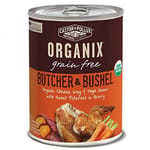
Rank 1: CASTOR & POLLUX ORGANIX Organic Grain-Free Turkey & Vegetable Recipe 12.7oz. This dog wet food product is characterized by its organic certification, indicating adherence to specific agricultural and processing standards that prohibit synthetic pesticides, fertilizers, and genetically modified organisms. The primary protein source is turkey, supplemented by a blend of vegetables, which contribute fiber, vitamins, and minerals. The formulation is grain-free, meaning it does not contain corn, wheat, or soy, often substituting these with alternative carbohydrate sources. The texture is typically a pâté or finely ground consistency, common for canned wet foods of this type. The net weight of the product is 12.7 ounces.
Rank 2: CASTOR & POLLUX ORGANIX Organic Grain-Free Turkey, Carrot & Potato Recipe 12.7oz. This dog wet food also carries an organic certification, signifying its production according to organic guidelines. Its main protein component is turkey. The carbohydrate and vegetable content includes carrots and potatoes, providing energy, dietary fiber, and various micronutrients. Like the top-ranked product, this formula is grain-free. The consistency is generally a smooth pâté, designed for uniform texture. The product is packaged in a 12.7-ounce container.
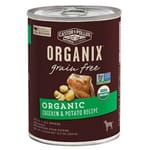
Rank 3: CASTOR & POLLUX ORGANIX Organic Grain-Free Chicken & Potato Recipe 12.7oz. This dog wet food is distinguished by its organic status, confirming its organic ingredient sourcing and manufacturing processes. The primary animal protein in this formulation is chicken. Potatoes serve as a significant carbohydrate source, contributing to energy and texture. This recipe is also grain-free, aligning with specific dietary preferences. The texture is consistent with a pâté, providing a homogeneous meal. This product is supplied in a 12.7-ounce container.
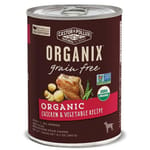
Rank 4: CASTOR & POLLUX ORGANIX Organic Grain-Free Chicken & Vegetable Recipe 12.7oz. This dog wet food is certified organic, reflecting its compliance with organic production standards. Chicken is the principal protein source, complemented by a mixture of various vegetables, which supply essential vitamins, minerals, and fiber. The formulation is grain-free, omitting common cereal grains. The product typically exhibits a pâté-like texture, suitable for easy consumption. The net content is 12.7 ounces.
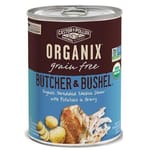
Rank 5: CASTOR & POLLUX ORGANIX Organic Grain-Free Shredded Chicken & Potato 12.7oz. This dog wet food maintains the organic certification common to the other ranked products. Its protein base is chicken, presented in a shredded form, which offers a distinct textural experience compared to pâté. Potatoes are included as a carbohydrate source. This formula is grain-free. The shredded texture provides visible pieces of meat, which can enhance palatability for some dogs. The product is contained in a 12.7-ounce unit.
Dog Wet Food: Quality Standards and Labeling Norms
The production and labeling of dog wet food are subject to specific quality standards and regulatory norms designed to ensure product safety, nutritional adequacy, and transparency for consumers. In many jurisdictions, these standards are established by governmental bodies or recognized industry associations. A central aspect of these regulations is the requirement for a complete and balanced nutritional profile. This means that the dog wet food must contain all essential nutrients—proteins, fats, carbohydrates, vitamins, and minerals—in appropriate proportions to meet the dietary needs of a dog for a specific life stage (e.g., growth, adult maintenance, gestation/lactation). Nutritional adequacy statements, such as "formulated to meet the nutritional levels established by the AAFCO Dog Food Nutrient Profiles for [life stage]," are commonly found on labels. AAFCO (Association of American Feed Control Officials) provides nutrient profiles for dog foods, which are widely adopted as benchmarks in the United States. Similar regulatory bodies and standards exist in other regions, such as FEDIAF (European Pet Food Industry Federation) in Europe. Labeling transparency is another critical norm for dog wet food. Product labels must accurately list all ingredients, typically in descending order by weight. This allows consumers to identify the primary components of the food. Specific ingredient definitions are often regulated to ensure consistency and prevent misleading claims. For instance, "meat" must generally refer to the clean flesh of slaughtered mammals, while "meat meal" indicates rendered animal tissue. The guaranteed analysis section of the label provides minimum percentages for crude protein and crude fat, and maximum percentages for crude fiber and moisture. These figures offer quantitative data on key macronutrients. Quality control during manufacturing is also a regulated aspect. Facilities producing dog wet food are expected to adhere to Good Manufacturing Practices (GMPs), which cover aspects like facility sanitation, equipment maintenance, personnel hygiene, and process controls. This helps prevent contamination and ensures product consistency. Traceability systems are often implemented to track ingredients from source to finished product, enabling rapid identification and recall if issues arise. Organic certification, as seen in the ranked products, represents an additional layer of quality standard. This certification requires adherence to specific organic farming and processing methods, verified by accredited third-party organizations. Claims such as "grain-free" or "natural" are also subject to definitions and verification requirements, ensuring that marketing statements accurately reflect the product's composition. Documentation norms require manufacturers to maintain records of ingredient sourcing, production batches, quality control tests, and nutrient analyses. This comprehensive framework of standards and labeling requirements aims to provide consumers with reliable information about the dog wet food they purchase and to ensure the safety and nutritional integrity of the product.
Dog Wet Food: Factual Insights and Characteristics
Dog wet food possesses several verifiable factual insights that underscore its distinct characteristics within the broader pet food industry. One notable insight pertains to its moisture content. By definition, canned or pouched dog wet food typically contains a moisture level ranging from 70% to 85%, significantly higher than the 6% to 10% found in dry kibble. This high moisture content contributes to increased hydration for the animal consuming the dog wet food, which can be particularly beneficial for dogs that do not drink sufficient water independently or those with certain urinary tract conditions. The process of thermal sterilization, specifically retort processing, is a critical factual characteristic of dog wet food. This method involves heating the sealed containers of food to temperatures often exceeding 121°C (250°F) under pressure for a specific duration. This intense heat treatment effectively eliminates spoilage microorganisms and pathogenic bacteria, rendering the product commercially sterile. This sterility is what allows dog wet food to have an extended shelf life, often several years, without the need for refrigeration prior to opening, and without relying heavily on chemical preservatives. The nutritional density of dog wet food, when compared on a dry matter basis, is another important characteristic. While the high moisture content means that a larger volume of wet food must be consumed to obtain the same amount of nutrients as dry food, the ingredients themselves are often nutrient-dense. This means that, gram for gram of dry matter, dog wet food can provide a concentrated source of proteins, fats, and other essential nutrients. The palatability of dog wet food is often cited as a characteristic, largely attributed to its higher moisture content and the presence of fresh or cooked meat and vegetable components. The aroma and texture, which are preserved through the canning process, can be more appealing to some dogs than the drier, harder texture of kibble. This can be particularly relevant for finicky eaters, older dogs with dental issues, or those recovering from illness. Furthermore, the precise portion control offered by individual cans or pouches of dog wet food is a practical insight. Unlike large bags of dry food, pre-portioned wet food can assist owners in managing their dog's caloric intake more accurately, which is beneficial for weight management or specific dietary regimens. The packaging itself, typically steel or aluminum cans, provides an impermeable barrier against oxygen, light, and moisture, further contributing to the stability and preservation of the dog wet food contents. This robust packaging ensures that the product maintains its nutritional integrity and safety until the point of consumption, illustrating a key engineering aspect of this food category.
This article has provided a structured overview of dog wet food, detailing its common classifications, material composition, processing methodologies, variations in usage, characteristics derived from sales data, and applicable quality standards. The objective has been to present objective information regarding the category's structure and attributes.
......View All