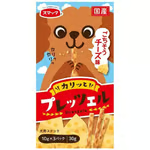
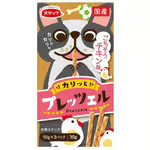
This category page features a variety of SMACK (スマック) dog treats, offering selections in various forms and flavors. These treats are intended to supplement a dog's daily diet or be used for reward-based training. The product range includes different types such as biscuits, jerky, and dental chews, designed to cater to the needs of various dog breeds and age groups. Some SMACK (スマック) dog treats may contain specific ingredients formulated to meet canine nutritional requirements. Consumers can browse and select SMACK (スマック) dog treat options suitable for their pets to enhance their dietary experience. Among the producers of the treat products presented on this page is 株式会社スマック, which is dedicated to providing diverse pet food solutions.
Dog treats, often referred to as SMACK dog treats in specific contexts, represent a diverse category of edible products designed for canine consumption, typically outside of regular meal times.
This article aims to provide a structured understanding of the dog treat category by outlining its inherent classifications, material compositions, structural attributes, and typical usage parameters, without engaging in product recommendations or comparative evaluations.
Classifications of SMACK Dog Treats
The classification of dog treats is commonly approached through several practical lenses within supply and distribution networks. One primary division is based on their primary function or intended use. This includes training treats, which are typically small, easily digestible, and used for reinforcement during behavioral instruction. Another functional classification is dental treats, engineered to assist in oral hygiene through mechanical abrasion during chewing or by incorporating specific ingredients. Recreational treats, often larger and more durable, are designed for extended chewing activity, providing mental stimulation and potentially contributing to dental health. Dietary-specific treats form another significant classification, encompassing formulations for puppies, senior dogs, or dogs with specific health conditions such as allergies, weight management needs, or sensitivities to certain ingredients. The physical form of the treat also serves as a classification criterion. This includes soft chews, semi-moist treats, crunchy biscuits, dehydrated or freeze-dried products, and chewable sticks or bones. Each form factor dictates different aspects of consumption, storage, and handling. Furthermore, the source of primary ingredients can lead to classifications such as meat-based, plant-based, or grain-free varieties. The material composition directly influences the treat's nutritional profile and suitability for dogs with specific dietary requirements. Understanding these common divisions is fundamental to comprehending the structural diversity within the SMACK dog treats category.
Material Composition and Processing Techniques for SMACK Dog Treats
The material composition of dog treats varies extensively, reflecting a broad spectrum of ingredients and processing methods. Proteins, carbohydrates, fats, vitamins, and minerals constitute the foundational elements. Protein sources frequently include various meats such as chicken, beef, lamb, and fish, or plant-based proteins like peas and lentils. The form of protein can range from whole meat to meat meals or protein isolates. Carbohydrates are often sourced from grains like wheat, corn, rice, or barley, or from grain-free alternatives such as sweet potatoes, tapioca, and chickpeas. Fats are incorporated for energy density and palatability, typically derived from animal fats or vegetable oils like flaxseed oil or sunflower oil. Fiber, essential for digestive health, might come from beet pulp, cellulose, or various fruits and vegetables. Vitamins and minerals are typically added as supplements to ensure nutritional completeness, although their presence can also be intrinsic to the primary ingredients. The structural integrity and shelf stability of SMACK dog treats are often managed through specific processing techniques. Extrusion is a common method, involving the cooking and shaping of ingredients under high heat and pressure, resulting in uniform, often crunchy pieces. Baking is another prevalent technique, particularly for biscuit-style treats, which involves dry heat to create a firm texture. Dehydration removes moisture to preserve ingredients, concentrating flavors and nutrients, while freeze-drying achieves similar preservation at lower temperatures, often retaining more of the original ingredient's structure and nutrient profile. Air-drying is also employed for certain types of treats, particularly those involving whole meat pieces. The choice of processing method directly impacts the final texture, moisture content, and nutrient degradation profile of the SMACK dog treats. For instance, treats designed for dental health may incorporate specific abrasive textures or enzyme-containing coatings, which are achieved through precise manufacturing processes. The overall formulation considers not only palatability but also the intended functional benefits and the shelf life of the SMACK dog treats.
Properties Across Usage Environments for SMACK Dog Treats
The properties of SMACK dog treats exhibit variations depending on their intended usage environment and the specific conditions they are designed to address. For instance, treats formulated for training purposes typically possess specific characteristics. They are often small in size, allowing for rapid consumption without distracting the dog from the training task. Their texture is frequently semi-moist or easily breakable, facilitating quick and clean delivery. The caloric density of training treats is generally lower per piece to prevent overfeeding during multiple repetitions. In contrast, treats intended for extended chewing, such as dental chews or recreational bones, are characterized by their durability and resistance to rapid disintegration. These products are engineered with a harder texture and a robust structure to withstand prolonged mastication, which can contribute to plaque and tartar reduction. The ingredients in these SMACK dog treats may also include specific components designed to promote oral health, such as phosphates or zinc compounds. Treats developed for dogs with specific dietary sensitivities or allergies will feature carefully selected ingredients, such as novel protein sources or limited ingredient formulations, to minimize adverse reactions. Their properties relate to the absence of common allergens like wheat, corn, soy, or specific animal proteins. Treats for puppies often have a softer texture, making them easier to chew for developing teeth, and a nutrient profile tailored to support growth. Senior dog treats may incorporate ingredients like glucosamine and chondroitin for joint support, and their texture might be softer to accommodate age-related dental issues. The storage environment also influences properties; treats with higher moisture content require airtight packaging to prevent spoilage, while dry biscuits are more tolerant of ambient conditions. The inherent properties of SMACK dog treats are thus intrinsically linked to their functional design and the specific needs of the canine consumer within various operational contexts.
Product Information from Sales Ranking: SMACK Dog Treats
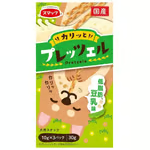
Rank 1: Japanese SMACK Dog Pretz Low-Fat Soy Milk Flavor 30g (Green) — This product is characterized by its low-fat formulation, indicating a reduced lipid content compared to standard dog treats. The primary flavor profile is derived from soy milk, suggesting the inclusion of soy-based ingredients. Its form factor is described as "Pretz," implying a stick or pretzel-like shape, which typically offers a crunchy texture. The 30g packaging unit denotes a small portion size.
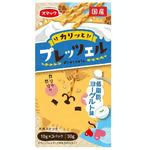
Rank 2: Japanese SMACK Dog Pretz Low-Fat Yogurt Flavor 30g (Blue) — Similar to the top-ranked product, this item also features a low-fat composition. The flavor is specified as yogurt, indicating the presence of dairy-derived ingredients or artificial flavorings mimicking yogurt. The "Pretz" form suggests a similar stick-like structure and crunchy consistency. The 30g unit size is consistent across this product line.
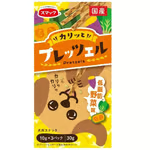
Rank 3: Japanese SMACK Dog Pretz Low-Fat Vegetable Flavor 30g (Orange) — This variant maintains the low-fat characteristic. Its flavor is described as vegetable, implying the incorporation of various vegetable ingredients, which contribute to its nutritional profile and taste. The "Pretz" format indicates a crunchy, stick-shaped treat. The packaging size remains 30g.
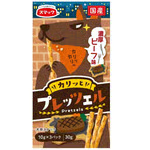
Rank 4: Japanese SMACK Dog Pretz Low-Fat Rich Thick-Cut Beef Flavor 30g (Brown) — This product emphasizes a low-fat formulation with a rich, thick-cut beef flavor. The term "thick-cut" may refer to the intensity of the beef flavoring rather than the physical cut of meat, or it could describe a more robust texture associated with beef. The "Pretz" form factor suggests a crunchy, elongated treat. It is packaged in a 30g unit.
Rank 5: Japanese SMACK Dog Pretz Cheese Flavor 30g (Red) — This SMACK dog treat features a cheese flavor, indicating the inclusion of cheese or cheese-derived ingredients. Unlike the preceding products, the "low-fat" descriptor is not explicitly stated for this variant, suggesting it may have a different fat content profile. The "Pretz" form factor indicates a crunchy, stick-like shape. The unit size is 30g.
Quality Standards and Labeling Norms for SMACK Dog Treats
The quality standards and labeling norms for SMACK dog treats, and dog treats in general, are subject to regulatory frameworks that aim to ensure product safety, accurate representation, and nutritional adequacy. In many regions, regulatory bodies establish guidelines for pet food manufacturing, encompassing ingredient sourcing, processing, and final product composition. These guidelines often dictate minimum and maximum levels for specific nutrients, as well as allowable contaminants. Labeling regulations require manufacturers to list ingredients in descending order by weight, providing transparency regarding the primary components of the SMACK dog treats. Nutritional information, often presented as a guaranteed analysis, specifies the minimum percentages of crude protein and crude fat, and maximum percentages of crude fiber and moisture. This analysis provides consumers with objective data on the macronutrient profile. Furthermore, claims such as "low-fat," "grain-free," or "all-natural" are often subject to specific definitions and verification criteria stipulated by regulatory bodies. For instance, a "low-fat" claim typically requires the product to contain a certain percentage less fat than a comparable standard product. Manufacturing facilities producing SMACK dog treats are often subject to inspections and must adhere to Good Manufacturing Practices (GMPs) to ensure hygiene, consistency, and product integrity. Documentation norms frequently require traceability of ingredients from source to finished product, enabling recall procedures if safety issues arise. The presence of specific certifications from independent organizations can also indicate adherence to particular quality benchmarks beyond statutory requirements. These standards and norms collectively provide a structured framework for the production and marketing of SMACK dog treats, allowing for verifiable assessment of their composition and safety.
Verifiable Factual Insights into SMACK Dog Treats
One verifiable factual insight regarding SMACK dog treats and the broader dog treat category relates to mastication mechanics. The physical hardness and structure of a dog treat significantly influence the degree of mechanical abrasion on a dog's teeth during consumption. Treats with a harder, more fibrous, or irregular texture tend to provide greater mechanical cleaning action compared to softer, smoother treats. This mechanical action can contribute to the removal of plaque and the prevention of tartar buildup, though it does not replace professional dental care. Different treat designs, such as those with specific ridges or porous structures, are engineered to maximize this abrasive effect. The relationship between treat texture and dental health is a well-documented area of veterinary science, with specific products undergoing clinical trials to substantiate their dental efficacy claims. Another factual insight pertains to the caloric density variability in SMACK dog treats. Despite similar physical sizes, the caloric content can differ substantially based on ingredient composition. Treats primarily composed of lean proteins and high-fiber ingredients will generally have a lower caloric density per unit weight compared to those rich in fats and simple carbohydrates. This difference is critical for managing a dog's overall energy intake, especially for dogs on weight management plans or those receiving multiple treats daily. Manufacturers are typically required to provide caloric information, often expressed in kilocalories per treat or per unit weight, allowing for precise dietary management. The formulation of SMACK dog treats is therefore a balance between palatability, functional benefits, and adherence to specific nutritional profiles, all of which are quantifiable and verifiable through laboratory analysis and standardized testing procedures.
The preceding information outlines the structural and compositional characteristics of dog treats, including those identified as SMACK dog treats, through an examination of their classifications, material properties, processing methods, usage context variations, and regulatory frameworks. This objective overview provides a foundation for understanding the category's inherent attributes.
......View All