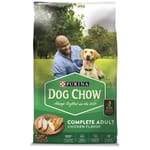
PURINA Dog Chow dog food represents a category of canine nutrition formulated to meet the dietary requirements of dogs. This product line offers various formulas tailored for different life stages and sizes of dogs, providing essential nutrients such as proteins, fats, carbohydrates, vitamins, and minerals. These formulations are designed to support dogs' daily activity levels and overall well-being. Products within the PURINA Dog Chow range typically come in dry kibble form and serve as a complete meal for dogs. Ingredient selection varies among different formulas to achieve specific nutritional objectives, such as supporting the growth and development of puppies or maintaining adult dogs. When selecting from this category, consumers can choose an appropriate PURINA Dog Chow dog food formula based on their dog's age, weight, and activity level.
Dog Chow, as a category of commercial animal feed, refers to prepared food products intended for consumption by domestic dogs, formulated to provide complete and balanced nutrition for their specific physiological needs.
This article aims to describe the structural attributes, material composition, and usage contexts within the dog food category, focusing on objective, verifiable information rather than product recommendations or comparative evaluations.
Dog Chow Classification and Supply Contexts
The classification of Dog Chow in practical use and supply contexts is primarily driven by life stage, breed size, and specific dietary requirements. Life stage classifications typically include puppy formulas, adult maintenance formulas, and senior formulas. Puppy formulas are characterized by higher protein and fat content to support rapid growth and development, often with added calcium and phosphorus for bone formation. Adult maintenance formulas provide balanced nutrition for mature dogs with moderate activity levels. Senior formulas frequently feature reduced calorie content to mitigate weight gain, increased fiber for digestive health, and often include joint-supporting ingredients like glucosamine and chondroitin. Breed size distinctions recognize the varied metabolic rates and physical structures of different dog breeds. Large breed formulas, for instance, often contain controlled calcium and phosphorus levels to support slower, more controlled bone growth, which is crucial in preventing orthopedic issues. Small breed formulas, conversely, may have higher caloric density due to their faster metabolisms and smaller kibble sizes for easier consumption. Beyond these broad categories, specialized Dog Chow products address specific dietary needs such as weight management, sensitive digestion, skin and coat health, or urinary tract support. These specialized formulations often modify macronutrient ratios, incorporate novel protein sources, or include specific nutraceuticals to target particular health concerns. The supply chain often segments these products, making it easier for consumers to identify formulas relevant to their dog's specific profile. Retailers typically organize shelves by life stage first, then by breed size, and finally by specialized dietary needs, reflecting the most common search parameters for Dog Chow products.
Dog Chow: Material Composition, Structural Forms, and Processing Techniques
The material composition of Dog Chow involves a carefully selected blend of ingredients designed to meet canine nutritional requirements, which include proteins, fats, carbohydrates, vitamins, and minerals. Proteins are typically derived from animal sources such as chicken, beef, lamb, fish, or eggs, and can also include plant-based proteins like peas or soy. These provide essential amino acids for muscle maintenance, tissue repair, and enzyme production. Fats, sourced from animal fats (e.g., chicken fat, beef tallow) or plant oils (e.g., flaxseed oil, sunflower oil), supply concentrated energy and essential fatty acids like omega-3 and omega-6, which are crucial for skin and coat health, and cellular function. Carbohydrates, often from grains like corn, wheat, rice, or barley, or from non-grain sources such as potatoes or sweet potatoes, serve as a primary energy source. Fiber, a type of carbohydrate, aids in digestive health. Vitamins and minerals are added as supplements to ensure complete nutritional balance, addressing micronutrient needs that may not be fully met by the primary ingredients. The structural forms of Dog Chow are predominantly dry kibble, but also include wet (canned) food, semi-moist food, and raw or freeze-dried options. Dry kibble is manufactured through an extrusion process where ingredients are mixed, cooked under high pressure and temperature, and then forced through a die to form specific shapes and sizes. This process gelatinizes starches, making them more digestible, and reduces moisture content, extending shelf life. Wet food typically involves cooking ingredients, often in gravy or jelly, and then sealing them in cans or pouches, followed by sterilization. Semi-moist foods have a higher moisture content than kibble but lower than wet food, often achieved through humectants. Raw or freeze-dried formats involve minimal processing, aiming to preserve the nutritional integrity of the ingredients. Each processing technique impacts the ingredient availability, shelf stability, and palatability of the final Dog Chow product.
Dog Chow Properties and Usage Environments
The properties of Dog Chow can vary significantly depending on the intended usage environment or specific conditions. For dogs living predominantly indoors with lower activity levels, a Dog Chow formulated with a moderate caloric density and balanced nutrient profile is typically appropriate. Such formulations often prioritize ingredients that support digestive health and may contain compounds to reduce stool odor, reflecting the confined indoor environment. In contrast, dogs with high activity levels, such as working dogs, sporting dogs, or those with extensive outdoor access, require a Dog Chow with a higher caloric content and increased levels of protein and fat to support energy expenditure and muscle recovery. These formulas are designed to sustain prolonged physical exertion and often include antioxidants to combat oxidative stress from intense activity. Environmental temperature also influences the requirements for Dog Chow. During colder months, dogs expending more energy to maintain body temperature may benefit from a diet with slightly increased caloric density. Conversely, in warmer climates, ensuring adequate hydration alongside a standard maintenance diet becomes more critical. Dogs with specific health conditions, such as allergies, obesity, or kidney disease, necessitate specialized Dog Chow. For instance, hypoallergenic formulas often use novel protein sources (e.g., duck, venison) or hydrolyzed proteins to minimize allergic reactions. Weight management formulas feature reduced fat and increased fiber content to promote satiety with fewer calories. Renal support formulas restrict protein, phosphorus, and sodium to reduce the burden on compromised kidneys. The selection of Dog Chow, therefore, is not a static decision but one that must consider the dog's individual characteristics, activity level, and the environmental factors impacting its physiological needs. The characteristics of Dog Chow are thus intrinsically linked to the context of its application, ensuring that the nutritional output aligns with the dog's requirements under various circumstances.
Dog Chow Product Characteristics Based on Sales Ranking
Product information, particularly regarding Dog Chow, can be analyzed by examining the characteristics of top-selling items. This provides an objective view of common formulations and ingredient choices prevalent in the market, without making any judgments about their efficacy or suitability for individual animals. The following describes material, formula, or structural characteristics of specific Dog Chow products based on their reported sales ranking.
Rank 1: PURINA Dog Chow Adult Formula Chicken Flavor Complete & Balanced 32lb – This Dog Chow product is formulated for adult dogs and features chicken as a primary protein source. The "Complete & Balanced" designation indicates that it meets the nutritional levels established by the Association of American Feed Control Officials (AAFCO) Dog Food Nutrient Profiles for adult maintenance. Its composition typically includes a blend of animal protein, grains, and added vitamins and minerals to support overall health. The 32lb packaging refers to the net weight of the product. The kibble structure is dry and extruded, a common form for adult Dog Chow products.
The characteristics of this top-ranking Dog Chow demonstrate a standard approach to adult canine nutrition, focusing on common protein sources and a broad nutritional profile suitable for a general adult dog population. The formulation aims to provide foundational nutrients without specializing in particular dietary needs, making it a versatile option for many households. The emphasis on completeness and balance is a key labeling attribute, signifying adherence to recognized industry standards for nutritional adequacy. This specific Dog Chow variant typically undergoes a process of ingredient blending, cooking, and extrusion to form uniform kibble pieces, which are then dried and packaged. The chicken flavor is derived from chicken meal or other chicken-based ingredients, contributing to the protein content and palatability of the Dog Chow. Its dry format contributes to its shelf stability and ease of handling for consumers.
Dog Chow: Quality Standards, Labeling Transparency, and Documentation Norms
Verifiable quality standards, labeling transparency, and documentation norms are fundamental to the Dog Chow industry, providing a framework for consumer assurance regarding product content and nutritional claims. In the United States, the Association of American Feed Control Officials (AAFCO) plays a significant role in establishing standards for pet food. While AAFCO is not a regulatory body, its guidelines are adopted by most state feed control officials and are used by the pet food industry to ensure products are formulated to be nutritionally complete and balanced. AAFCO provides nutrient profiles for different life stages of dogs (e.g., growth, adult maintenance, gestation/lactation). A Dog Chow product labeled "complete and balanced" must meet these specific nutrient profiles, either through formulation or by passing feeding trials using AAFCO procedures. The label on Dog Chow products is a critical document, mandated to include specific information. This typically comprises the product name, net weight, guaranteed analysis, ingredient list, nutritional adequacy statement, feeding guidelines, and the manufacturer's name and address. The guaranteed analysis provides minimum percentages for crude protein and crude fat, and maximum percentages for crude fiber and moisture. These values offer a quantitative overview of the macronutrient content. The ingredient list details all ingredients in descending order by weight, providing transparency regarding the raw materials used in the Dog Chow. The nutritional adequacy statement, often citing AAFCO profiles, confirms the product's intended life stage and nutritional completeness. Beyond AAFCO, other regions have their own regulatory bodies and standards, such as the European Pet Food Industry Federation (FEDIAF) in Europe. FEDIAF also publishes nutritional guidelines and codes of good practice for the manufacture and labeling of pet food, aiming for similar objectives of product safety and nutritional adequacy for Dog Chow. Manufacturers are typically required to maintain records of ingredient sourcing, manufacturing processes, quality control checks, and product testing. This documentation supports the claims made on the Dog Chow label and provides traceability in case of product issues. Third-party certifications, though not universally mandatory, can also exist, indicating adherence to additional quality or safety protocols. These certifications might cover aspects like ingredient quality, manufacturing practices, or specific dietary claims, further reinforcing the verifiable characteristics of Dog Chow.
Dog Chow: Factual Insights
A verifiable factual insight concerning Dog Chow relates to the digestibility of various protein sources. Research has shown that not all protein sources are equally digestible for dogs. For instance, animal-derived proteins such as chicken meal, lamb meal, and egg typically exhibit higher protein digestibility coefficients compared to some plant-based proteins. This means that a larger proportion of the protein from these sources is absorbed and utilized by the dog's body. The digestibility of protein in Dog Chow is a key factor in assessing its nutritional value, as it directly impacts the amount of amino acids available for metabolic functions. Manufacturers often consider protein digestibility when formulating Dog Chow to ensure that the stated protein content on the label translates effectively into usable nutrition for the dog.
Another verifiable factual insight regarding Dog Chow involves the role of specific carbohydrate sources in glycemic response. Different carbohydrate sources, such as corn, rice, or potatoes, can elicit varying post-prandial glucose responses in dogs. While all provide energy, the rate at which they are digested and absorbed influences blood sugar levels. For example, some highly processed grains may lead to a quicker glucose spike compared to more complex carbohydrates or those with higher fiber content. This characteristic is particularly relevant in the formulation of Dog Chow for specific conditions, such as weight management or for dogs with diabetes, where managing blood glucose levels is a primary concern. The type and processing of carbohydrate ingredients in Dog Chow are therefore carefully selected to achieve a desired glycemic profile.
The category of Dog Chow encompasses a wide array of products, each characterized by specific material compositions, structural forms, and processing methods, all designed to meet the diverse nutritional requirements of domestic dogs across various life stages and conditions.
......View All