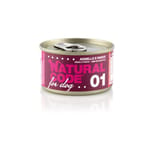
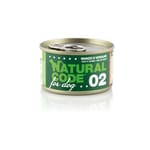
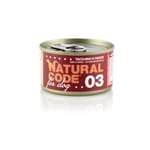
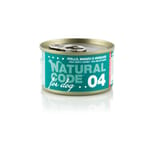
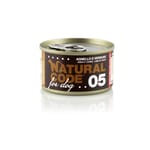
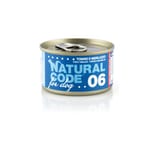
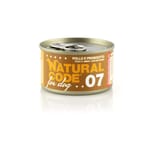
Natural Code dog wet food encompasses a variety of formulations, designed to offer diverse dietary options for canines. These products are typically presented in canned wet food format, containing ingredients such as meat, offal, vegetables, and fruits, prepared into a uniform pâté-like texture or with distinct chunks of meat. The Natural Code dog wet food range is categorized into puppy, adult, and senior dog formulas, tailored to meet the physiological characteristics of dogs at different life stages and nutritional requirements. Product types include single protein sources or combinations of multiple proteins, supplemented with vitamins, minerals, and other nutrients. These wet foods can serve as a complete meal or be mixed with dry kibble, providing dogs with hydration and additional nourishment. Some Natural Code dog wet food formulations focus on specific nutritional support, such as for dogs with sensitive stomachs or those requiring skin and coat health improvement. The packaging primarily consists of easy-to-store and open metal cans, ensuring the freshness and convenience of the contents.
Dog wet food, often referred to as canned dog food or dog stew, constitutes a category of prepared pet sustenance distinguished by its high moisture content and typically preserved in hermetically sealed containers.
This article aims to describe the structural attributes, material composition, and usage context within the category of dog wet food, without offering product recommendations or comparative evaluations of advantages.
Dog Wet Food: Common Categorizations and Formulations
The category of dog wet food is commonly divided based on several key characteristics in practical and supply contexts. These distinctions often revolve around the primary protein source, the overall texture and consistency, and the intended dietary purpose. For instance, formulations are frequently classified as single-protein or multi-protein. Single-protein options emphasize one animal source, such as lamb, beef, or turkey, which can be relevant for dogs with specific dietary sensitivities or requirements. Multi-protein formulations combine several animal-derived ingredients, aiming for a broader nutritional profile or palatability. Another common division concerns the texture, which can range from finely minced pâtés to chunky stews with visible pieces of meat and vegetables. Pâté-style dog wet food typically has a smooth, uniform consistency, suitable for mixing with other foods or for dogs with dental issues. Chunky or shredded varieties present identifiable pieces, which some dog owners prefer for their perceived natural appearance and texture. The intended dietary purpose also creates distinct subcategories within dog wet food. These include maintenance formulas for adult dogs, growth formulas for puppies, and specialized formulas for senior dogs or those with particular health conditions, such as weight management or gastrointestinal support. Each of these subcategories is formulated with specific nutrient ratios and ingredient profiles to meet the physiological demands of the target canine population.
Dog Wet Food: Material Composition and Processing Techniques
Differences in material composition, structural forms, formulation methods, and processing techniques significantly define the various types of dog wet food. The foundational material composition primarily involves animal-derived proteins, such as muscle meat, organ meat, and sometimes by-products, complemented by plant-based ingredients like vegetables, fruits, and grains or starches. The specific ratios and types of these ingredients vary widely. For example, some dog wet food products prioritize high meat content, often listing a specific animal protein as the first ingredient. Others incorporate a balance of meat, vegetables, and grains, aiming for a complete and balanced diet. The structural form of the finished product is largely determined by the initial processing of these raw materials. Ingredients can be finely ground to create a smooth pâté, or cut into larger chunks and mixed with gravy or jelly to form a stew-like consistency. The formulation methods involve carefully balancing macronutrients (proteins, fats, carbohydrates), micronutrients (vitamins, minerals), and water to meet established nutritional standards for dogs. This balancing act requires precise measurement and blending of ingredients. Processing techniques are crucial for both preservation and palatability. The most common method for dog wet food is retort sterilization. This involves sealing the prepared food in cans or pouches and then subjecting it to high temperatures under pressure for a specific duration. This process effectively sterilizes the product, eliminating harmful microorganisms and ensuring a long shelf life without refrigeration until opened. Other techniques might include steam cooking or gentle cooking methods for specific ingredients before final assembly and sterilization. The choice of processing technique can influence the nutrient retention, texture, and overall sensory attributes of the dog wet food. Ingredients like potatoes or various vegetables are often cooked prior to being mixed with the protein sources and gravy to ensure proper texture and digestibility within the final dog wet food product.
Dog Wet Food: Property Variations Across Usage Environments
The properties of dog wet food may vary across different usage environments or conditions, primarily in terms of storage, palatability, and integration into a dog's overall diet. Unopened dog wet food typically exhibits high stability under ambient conditions due to its hermetically sealed packaging and sterilization process. This characteristic makes it suitable for storage in various household environments without refrigeration, provided temperatures remain within a reasonable range and direct sunlight is avoided. Once opened, however, the properties change significantly. The exposed dog wet food becomes susceptible to microbial growth and oxidation, necessitating refrigeration and consumption within a short period, usually 2-3 days. This shift in storage requirements influences its practicality for multi-day feeding without proper cold storage. Furthermore, the high moisture content of dog wet food contributes to its perceived palatability among dogs. This characteristic can be particularly advantageous in environments where dogs may be prone to dehydration, as it provides a supplemental source of hydration. However, in very cold environments, the high water content could lead to freezing if left exposed, altering its texture and potentially making it less appealing or difficult to consume. The integration of dog wet food into a dog's diet also depends on environmental factors. In environments where fresh ingredients are scarce or refrigerator space is limited, canned dog wet food offers a convenient and nutritionally complete option. Conversely, in situations where a dog's activity level or specific health conditions require precise caloric control, the energy density of different dog wet food formulations must be carefully considered. The physical form factor of dog wet food, being a ready-to-eat product, also influences its use in various settings, from daily home feeding to travel situations, where preparation facilities might be limited. The consistent quality and nutritional profile of dog wet food, ensured by manufacturing standards, provides a reliable feeding solution across diverse environmental conditions, as long as post-opening storage guidelines are followed.
Dog Wet Food: Product Characteristics Based on Sales Ranking
The following descriptions detail the material, formulation, and structural characteristics of specific dog wet food products, based strictly on their observed sales ranking. These descriptions focus on objective attributes without reference to usage recommendations or product comparisons.
Rank 1: Natural Code Dog Wet Food Lamb & Potatoes 90g — This dog wet food product is formulated with lamb as a primary protein source, complemented by potatoes. The presence of lamb indicates an animal-derived protein component. Potatoes contribute carbohydrates and dietary fiber. The 90g unit size suggests a single-serving or portion-controlled format. The texture is typically a moist, cohesive mixture, consistent with a wet food product. The ingredient profile indicates a focus on specific protein and carbohydrate sources.
Rank 2: Natural Code Dog Wet Food Beef & Vegetables 90g — This dog wet food features beef as its primary protein component, alongside a blend of various vegetables. Beef provides animal-derived protein and fats. The inclusion of vegetables indicates the presence of plant-based ingredients, which contribute vitamins, minerals, and fiber. The 90g package size is a standard single-serving format. The structural form is generally a finely textured or minced consistency, characteristic of many dog wet food formulations.
Rank 3: Natural Code Dog Wet Food Turkey & Potatoes 90g — This dog wet food utilizes turkey as the main animal protein source, paired with potatoes. Turkey offers a different animal protein profile compared to beef or lamb, providing specific amino acids and fats. Potatoes contribute carbohydrates. The 90g container suggests a portion-controlled offering. The texture is consistent with other dog wet food products, typically a moist, semi-solid preparation.
Rank 4: Natural Code Dog Wet Food Chicken & Beef & Vegetables 90g — This dog wet food is distinguished by its multi-protein formulation, incorporating both chicken and beef as animal protein sources, combined with vegetables. The blend of chicken and beef provides a diverse amino acid profile. Vegetables contribute plant-derived nutrients and fiber. The 90g unit is designed for single-serving applications. The structural characteristics often present as a mixture of finely diced or shredded components suspended in a gravy or jelly, typical for a dog wet food with visible vegetable inclusions.
Rank 5: Natural Code Dog Wet Food Lamb & Vegetables 90g — This dog wet food focuses on lamb as the primary animal protein, combined with a selection of vegetables. Lamb supplies animal protein and fats. The addition of vegetables introduces plant-based nutrients and fiber. The 90g packaging indicates a single-portion format. The consistency is characteristic of dog wet food, typically a moist, uniform, or slightly chunky mixture. This formulation emphasizes a specific animal protein source alongside plant-derived components.
Dog Wet Food: Quality Standards and Labeling Norms
The verifiable quality standards, labeling transparency, and documentation norms for dog wet food are subject to regulatory oversight in many jurisdictions, ensuring product safety and accurate representation. In regions like the United States, organizations such as the Association of American Feed Control Officials (AAFCO) establish model regulations for pet food labeling and ingredient definitions. While AAFCO itself does not regulate, its guidelines are widely adopted by state feed control officials. These guidelines mandate specific information on dog wet food labels, including a guaranteed analysis, which specifies the minimum percentages of crude protein and crude fat, and maximum percentages of crude fiber and moisture. This analysis provides a quantitative overview of the macronutrient composition. The ingredient list is another critical component, required to be listed in descending order by weight, allowing consumers to identify the primary components of the dog wet food. Ingredients must be clearly defined according to AAFCO's official definitions. Furthermore, a "nutritional adequacy statement" is often required, indicating whether the dog wet food is formulated to meet the nutritional levels established by AAFCO for a specific life stage (e.g., "growth," "maintenance," or "all life stages"), or if it is intended for intermittent or supplemental feeding only. This statement is typically supported by either formulation to a nutrient profile or by feeding trials. Manufacturing facilities producing dog wet food are also subject to various food safety regulations, often mirroring those for human food, concerning sanitation, hazard analysis, and good manufacturing practices. Traceability systems are increasingly common, allowing manufacturers to track ingredients from source to finished product, which supports quality control and recall procedures if necessary. Documentation norms include maintaining records of ingredient sourcing, production processes, quality control checks, and nutritional analyses. These standards collectively contribute to the safety, nutritional integrity, and transparency of dog wet food products available in the market.
Dog Wet Food: Verifiable Factual Insights
One verifiable factual insight regarding dog wet food concerns its typical moisture content. Dog wet food generally contains between 75% and 85% moisture by weight. This significantly higher moisture level, compared to dry kibble which typically ranges from 5% to 10% moisture, contributes to its different physical properties and preservation methods. The high moisture content is a defining characteristic of dog wet food, impacting its energy density and post-opening shelf life. Another verifiable factual insight relates to the processing method employed for shelf-stable dog wet food. The vast majority of commercially available dog wet food is subjected to a heating process known as retort sterilization after being sealed in its container. This process involves heating the sealed cans or pouches to temperatures typically between 116°C and 121°C (240°F to 250°F) under pressure for a specific duration. This thermal treatment effectively destroys pathogenic microorganisms and spoilage organisms, rendering the dog wet food commercially sterile and enabling it to be stored at ambient temperatures for extended periods without refrigeration, provided the seal remains intact. This fundamental processing step is what differentiates canned dog wet food from refrigerated fresh pet food products.
This article has described the structural attributes, material composition, and usage context of dog wet food, providing objective information without offering product recommendations or comparative evaluations.
......View All