Instinct dog treats encompass a variety of forms, designed to provide daily supplements and rewards for canines. This category typically includes options with diverse textures and palatability such as freeze-dried treats, jerky, and biscuits. The ingredient selection for Instinct dog treats is varied, commonly featuring single-source animal protein or combinations with fruits and vegetables to cater to different canine requirements. Their forms are designed for convenience, with small kibbles suitable for training rewards and larger pieces for chewing satisfaction. Beyond offering flavor, these treats can also contribute to maintaining a dog's activity levels and basic nutritional intake. For puppies or dogs with specific dietary needs, some Instinct dog treat products also offer corresponding formulations.
Instinct dog treats are a category of processed food items specifically formulated and manufactured for canine consumption, typically provided in addition to a dog's primary diet.
This article aims to describe the structural attributes, material composition, and usage context within the category of Instinct dog treats, without engaging in product recommendations or comparative analysis of advantages.
Instinct Dog Treats: Classification by Formulation Type
The classification of Instinct dog treats commonly differentiates products based on their primary formulation type. One significant division is between raw-based formulations and those that undergo more extensive processing. Raw-based treats, such as freeze-dried varieties, primarily consist of uncooked animal proteins and often include minimal additional ingredients. These are designed to retain the inherent nutritional profiles of their raw components. In contrast, other treat formulations may involve cooking, baking, or extrusion processes, leading to different textural and structural characteristics. These methods can alter the molecular structure of ingredients, influencing digestibility and nutrient availability. Further distinctions arise from the inclusion of specific functional ingredients, such as supplemental vitamins, minerals, or botanicals, which are often added to target particular health aspects. The presence or absence of grains, legumes, and artificial additives also forms a basis for classification, with many Instinct dog treats emphasizing grain-free or limited-ingredient profiles. The intended use, such as training rewards or supplemental nutrition, can also influence the formulation, leading to variations in caloric density and ingredient concentration. The overall material composition fundamentally dictates the classification within this product segment.
Instinct Dog Treats: Material Composition and Processing Techniques
The material composition of Instinct dog treats centers predominantly on animal proteins, which are often the first and most abundant ingredients. Common protein sources include beef, chicken, lamb, and turkey, with some formulations incorporating novel proteins like rabbit or venison. These proteins provide essential amino acids vital for canine health. Beyond protein, fats are crucial components, typically derived from the animal protein itself or added as rendered animal fat or plant-based oils, supplying concentrated energy and aiding in nutrient absorption. Carbohydrates, when present, are often sourced from vegetables and fruits in grain-free formulations, such as peas, sweet potatoes, apples, and blueberries, contributing fiber, vitamins, and minerals. Some Instinct dog treats also incorporate organ meats, like liver or heart, which are nutrient-dense. Processing techniques for these treats vary significantly. Freeze-drying is a prominent method where raw ingredients are frozen and then placed in a vacuum chamber, allowing ice to sublimate directly into vapor. This process removes moisture while preserving the cellular structure and nutrient content of the raw materials. Other techniques include air-drying, which involves circulating air to remove moisture, and various forms of cooking or baking that alter the physical and chemical properties of the ingredients. The choice of processing method directly impacts the final texture, shelf stability, and nutritional profile of the Instinct dog treats.
Instinct Dog Treats: Properties Across Usage Environments
The properties of Instinct dog treats exhibit variations depending on the intended usage environment or specific conditions. For instance, treats designed for training purposes often feature a smaller, more uniform size and a texture that allows for quick consumption without excessive crumbling, making them suitable for repetitive rewarding in various settings, from indoor training sessions to outdoor obedience classes. The moisture content of the treat also influences its suitability for different environments; lower moisture treats, such as freeze-dried Instinct dog treats, demonstrate greater stability in varying humidity levels and are less prone to spoilage during extended outdoor activities or travel. Conversely, softer, higher-moisture treats might be preferred for older dogs or those with dental sensitivities, but these may require more careful storage, especially in warmer or more humid climates, to maintain their integrity and prevent degradation. The caloric density is another property that becomes relevant; high-calorie treats might be appropriate for active dogs requiring quick energy replenishment during strenuous exercise, while lower-calorie options are more suitable for dogs on weight management programs or those receiving multiple treats daily. Packaging also plays a role in preserving properties across environments, with resealable bags being common to protect against moisture and air exposure, which can affect texture and palatability. The structural integrity of the treat, whether it withstands being carried in a pocket or pouch without crumbling, is a practical consideration across different usage contexts.
Instinct Dog Treats: Product Characteristics from Sales Ranking
This section details the material, formulation, and structural characteristics of Instinct dog treats based on observed sales rankings, providing objective product descriptions.
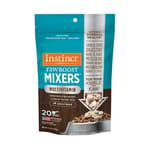
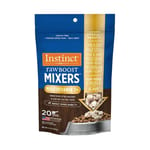
Rank 1: Instinct Freeze-Dried Raw Boost Dog Food Topper Multi-Vitamin Senior 7+ Beef Recipe 0.75oz — This product is a freeze-dried raw composition, primarily featuring beef as the protein source. It is formulated specifically for senior dogs aged 7 years and older, incorporating a blend of multiple vitamins. The freeze-drying process maintains the raw state of the ingredients, removing moisture to create a lightweight, shelf-stable product. Its intended use is as a food topper, meaning it is designed to be added to a dog's regular meal. The structure consists of small, palatable pieces that can be easily mixed with other foods.
Rank 2: Instinct Freeze-Dried Raw Boost Dog Food Topper Multi-Vitamin Adult Beef Recipe 0.75oz — This item shares many characteristics with the Rank 1 product. It is also a freeze-dried raw formulation, with beef as the primary protein. However, this specific recipe is tailored for adult dogs, not specifically seniors. It includes a multi-vitamin blend. The processing method is freeze-drying, resulting in a low-moisture, raw-ingredient product. Its structural form is small, discrete pieces intended for use as a food topper, designed to enhance the nutritional profile of a dog's main diet.
Instinct Dog Treats: Quality Standards and Labeling Norms
Quality standards for Instinct dog treats are primarily governed by regulatory bodies and industry associations, ensuring product safety and accurate labeling. In the United States, the Association of American Feed Control Officials (AAFCO) provides guidelines and definitions for pet food ingredients and labeling, which many manufacturers adhere to voluntarily or are required to by state laws. These guidelines cover aspects such as ingredient definitions, guaranteed analysis, and feeding directions. For Instinct dog treats that claim to be "raw," specific processing controls are often in place to mitigate potential microbial risks, such as high-pressure processing (HPP) or stringent sourcing and testing protocols. Labeling transparency is a key aspect, with product labels typically required to list ingredients in descending order by weight, provide a guaranteed analysis (minimum percentages of crude protein and crude fat, and maximum percentages of crude fiber and moisture), and sometimes include caloric content. Claims such as "grain-free," "limited ingredient," or "natural" are subject to specific definitions and must be verifiable. Manufacturers often provide documentation regarding ingredient sourcing, manufacturing processes, and nutritional analyses to demonstrate compliance with these standards. The presence of a "complete and balanced" claim for a treat is rare, as treats are generally considered supplemental, but any such claim would necessitate adherence to AAFCO nutrient profiles. The integrity of Instinct dog treats is thus supported by a framework of regulatory oversight and industry best practices.
Instinct Dog Treats: Factual Insights
A verifiable factual insight concerning Instinct dog treats relates to the specific application of freeze-drying technology. Freeze-drying, while preserving the raw state of ingredients, reduces the weight of the final product significantly due to the removal of water. For example, a raw beef component that originally weighs 100 grams might yield only about 25-30 grams of freeze-dried material, retaining most of its original nutrient density in a much lighter form. This process also contributes to the extended shelf life of freeze-dried Instinct dog treats without the need for synthetic preservatives, as microbial growth is inhibited by the absence of moisture. Another insight involves the protein content in relation to caloric density. Many Instinct dog treats, particularly those based on animal proteins, exhibit a high protein-to-calorie ratio compared to some other types of dog snacks. This characteristic is often a result of their primary composition being lean animal muscle and organ meats, with minimal filler ingredients. This composition means that a relatively small volume of these treats can deliver a substantial amount of protein, which is essential for muscle maintenance and overall canine health, without introducing excessive caloric intake from carbohydrates or fats, depending on the specific formulation. This structural and compositional attribute is a defining feature of many Instinct dog treats.
The preceding information has provided an overview of Instinct dog treats, detailing various classification parameters, material compositions, processing methods, and relevant quality standards. The aim has been to present a factual account of the category's structure and characteristics.
......View All