This category page features various Four Paws dog training pads and dog diapers, intended for pet house-training and maintaining a clean environment. These products are designed to offer absorbent functionality, addressing the urination needs of canines. Dog training pads typically consist of multiple layers, including an absorbent core and a leak-proof backing, engineered to lock liquids within the pad and minimize leakage onto floors. Sizes and thicknesses vary to accommodate different dog breeds and usage scenarios, serving as an aid for designated potty areas. Such products are a common choice for upholding household hygiene and facilitating pet waste management. Beyond Four Paws dog training pads, some items can be used in conjunction with other pet care products, such as Four Paws shampoo, to help maintain overall pet cleanliness and comfort.
Dog training pads, also known as puppy pads or pet training pads, are absorbent materials designed for indoor pet waste management, primarily utilized during the house-training of puppies, for senior dogs, or for pets with limited outdoor access.
This article aims to describe the structural attributes, material composition, and usage contexts within the dog training pads category. The objective is to provide objective, verifiable information regarding these products, without engaging in product recommendations, comparative analyses, or promotional statements.
Dog Training Pads: Common Divisions in Practical Use
The category of dog training pads is commonly divided based on several practical considerations, which reflect their intended application and design. One primary division relates to absorbency capacity, often correlated with the size and volume of liquid they are designed to manage. Pads are frequently classified as standard absorbency, high absorbency, or extra-high absorbency, with the latter incorporating additional layers or more absorbent polymers. Another common division is based on the presence of attractants; some dog training pads are manufactured with pheromonal or olfactory attractants embedded within their material structure, intended to encourage the animal to use the pad. Furthermore, pads can be categorized by their structural rigidity and backing material; some feature a more robust, tear-resistant top layer and a thicker, non-slip waterproof backing, while others prioritize a thinner profile for disposability. The inclusion of odor-neutralizing agents also forms a basis for classification, with some pads integrating activated charcoal or baking soda into their absorbent core to mitigate odors associated with pet waste. These divisions reflect manufacturing choices intended to address specific aspects of pet waste management, such as volume, training efficacy, physical durability, and odor control. Each classification criterion represents a distinct attribute influencing the functional parameters of dog training pads in various domestic environments.
Dog Training Pads: Material Composition and Processing Techniques
The material composition of dog training pads is a multi-layered structure designed for liquid absorption and containment. Typically, a pad consists of at least three principal layers: a top sheet, an absorbent core, and a bottom sheet. The top sheet, which comes into direct contact with the animal, is commonly constructed from non-woven fabrics, such as polypropylene or polyethylene. These materials are selected for their liquid-permeable properties, allowing urine to pass through quickly to the absorbent core while maintaining a relatively dry surface. The absorbent core is the most critical component for liquid retention. This layer is primarily composed of cellulose pulp, often referred to as fluff pulp, which is highly effective at wicking and retaining moisture. Superabsorbent polymers (SAPs), such as sodium polyacrylate, are frequently integrated into the cellulose pulp. SAPs are capable of absorbing many times their weight in liquid and converting it into a gel-like substance, thereby preventing leakage and reducing odor. The bottom sheet serves as a waterproof barrier, preventing absorbed liquid from seeping through to the underlying surface. This layer is typically made from polyethylene film, chosen for its impermeability and durability. Some dog training pads may include additional layers, such as a tissue layer between the top sheet and the absorbent core to aid in liquid distribution, or an additional non-woven layer on the bottom to provide anti-slip properties or enhanced tear resistance. The manufacturing process involves layering these materials, often through lamination or thermal bonding, and then cutting them into specific dimensions. Attractants, when present, are often sprayed onto or incorporated within the top sheet or absorbent core during manufacturing. Odor neutralizers are typically blended with the SAPs or cellulose pulp in the absorbent core. The precise ratios of cellulose pulp to SAPs, the thickness of the polyethylene film, and the density of the non-woven top sheet are all variables in the manufacturing process that dictate the overall absorbency and structural integrity of the final dog training pads.
Dog Training Pads: Property Variations Across Usage Environments
The properties of dog training pads may exhibit variations depending on the specific usage environment or conditions in which they are deployed. In indoor settings, such as apartments or homes, the primary functional requirements for dog training pads include high absorbency to manage multiple urinations, effective odor control to maintain air quality, and a leak-proof barrier to protect flooring. Pads used in these environments often feature thicker absorbent cores with a higher concentration of superabsorbent polymers and robust polyethylene backings. The presence of attractants can be a significant factor in training puppies indoors, influencing their propensity to use the designated area. For outdoor or semi-outdoor use, such as on balconies or in designated pet areas, the pads may require enhanced durability against environmental factors like wind, and potentially UV resistance if exposed to direct sunlight for extended periods. While outdoor use might reduce immediate odor concerns due to ventilation, the structural integrity of the dog training pads becomes more prominent to prevent tearing or displacement. In travel contexts, such as during car journeys or stays in pet-friendly accommodations, compact size and rapid absorption are often prioritized. Thinner, more portable dog training pads that can be easily folded or disposed of are frequently preferred. For animals with specific health conditions, such as incontinence or post-surgical recovery, the critical property is often maximum absorbency and extended wear time, requiring pads with very high SAP content and potentially larger dimensions. The surface material may also be optimized for gentleness for animals with sensitive skin or wounds. The efficacy of odor neutralizers in dog training pads can also vary with ambient humidity and temperature; higher temperatures and humidity may accelerate bacterial growth, potentially overwhelming standard odor control agents. The structural stability of the pads, including their ability to stay flat and resist bunching, is also crucial in preventing accidents, particularly for active puppies or larger breeds. These environmental considerations dictate adjustments in material selection, layer thickness, and the incorporation of specific additives to optimize the performance of dog training pads for their intended application.
Dog Training Pads: Product Information Based on Sales Ranking
Rank 1: Four Paws Wee-Wee Pads Puppy Pads, 28 Count (F01628) — These dog training pads are designed with a multi-layer construction. The absorbent core incorporates superabsorbent polymers to convert liquid into a gel, thereby containing moisture and preventing leakage. The top layer is permeable to allow rapid liquid penetration, and the bottom layer consists of a waterproof film to protect floor surfaces. The pads are sized for general use with puppies and smaller adult dogs.
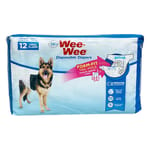
Rank 2: Four Paws Disposable Diapers, Large, 12 Count (F97233) — These are disposable dog diapers, not traditional flat dog training pads. They are constructed with an absorbent core containing superabsorbent materials for urine retention, encased within a soft, non-woven fabric exterior. The diaper design includes adjustable fasteners for a secure fit around the dog's waist and tail opening. The exterior material is designed to be breathable while maintaining a leak-proof barrier. These are intended for direct wear by the animal.
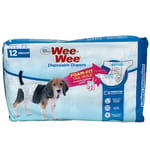
Rank 3: Four Paws Disposable Diapers, Medium, 12 Count (F97232) — Similar in construction to the large size, these disposable dog diapers feature an absorbent core with superabsorbent polymers for liquid management. The outer layer is a non-woven material, and the product includes adjustable tabs for fitting. The design incorporates a tail hole and elasticized leg openings to conform to the dog's anatomy, providing a containment solution for urine. This size is formulated for medium-sized dogs.
Rank 4: Four Paws Disposable Diapers, Small, 12 Count (F97231) — These disposable dog diapers, like their larger counterparts, are engineered with an internal absorbent layer that utilizes superabsorbent materials. The external fabric is a soft, non-woven textile, and the product is equipped with an adjustable closure system. The anatomical design includes a tail aperture and elasticized contours around the legs to ensure a snug fit and prevent leakage. This size is manufactured for small-sized dogs.
Rank 5: Four Paws Disposable Diapers, Extra Small, 12 Count (F97230) — The extra-small disposable dog diapers share the fundamental construction principles of the other sizes. They contain an absorbent core with superabsorbent polymers to manage liquid waste. The outer shell is composed of a breathable, non-woven fabric, and the product features adjustable tabs for proper fitting. The design incorporates a tail opening and elasticized edges for containment, specifically scaled for extra-small dog breeds. These are designed for direct wear on the animal.
Dog Training Pads: Verifiable Quality Standards and Labeling Norms
Verifiable quality standards and labeling norms for dog training pads often pertain to their absorbent capacity, material safety, and structural integrity. While no single international standard body exclusively governs pet training pads akin to human hygiene products, manufacturers often adhere to internal quality control protocols or voluntary industry guidelines. One key aspect is the absorbency rating, which can be quantified through standardized lab tests measuring the volume of liquid a pad can absorb before saturation or leakage. This is frequently expressed in milliliters or liters. Another critical standard relates to the composition of the superabsorbent polymers (SAPs) and other materials, ensuring they are non-toxic and hypoallergenic for animal contact. Manufacturers may provide certifications for material safety data sheets (MSDS) for their raw materials, particularly for the non-woven top sheet and the SAPs. The leak-proof integrity of the bottom polyethylene film is also a subject of quality control, often tested for its tensile strength and resistance to tearing under various conditions. Odor neutralizing agents, if present, may be subjected to efficacy testing to verify their capacity to reduce specific volatile organic compounds associated with urine. Labeling norms typically include the dimensions of the dog training pads (length and width in centimeters or inches), the quantity of pads per package, and basic usage instructions. Labels also frequently specify the material composition, listing components such as "non-woven fabric," "fluff pulp," "superabsorbent polymer," and "polyethylene film." Some labels may indicate the presence of attractants or odor control technologies. Batch numbers and manufacturing dates are standard for traceability. While not universally mandated, some brands provide information on the environmental impact of their materials, such as whether the cellulose pulp is sourced from sustainably managed forests. The absence of certain chemicals, such as chlorine bleaching agents in the pulp, can also be a stated quality parameter. Consumers typically rely on manufacturer claims and internal testing data, as well as adherence to general product safety regulations applicable to consumer goods in their respective regions. The labeling aims to provide transparent information about the physical and chemical attributes of the dog training pads.
Dog Training Pads: Factual Insights
One verifiable factual insight regarding dog training pads is that superabsorbent polymers (SAPs), a key component in their absorbent core, were initially developed for agricultural purposes to improve soil water retention. Their application expanded significantly into hygiene products, including dog training pads, due to their capacity to absorb hundreds of times their weight in water and convert it into a gel, thereby effectively locking away liquid. This property is critical for preventing leakage and maintaining a dry surface. Another factual insight is that the "attractant" present in some dog training pads is often a synthetic pheromone or a blend of specific volatile organic compounds. These compounds are designed to mimic the olfactory signals that naturally draw dogs to specific elimination sites, thereby aiding in the house-training process. The effectiveness of these attractants can vary between individual animals due to differences in olfactory sensitivity and behavioral responses.
The preceding information has provided a structural and material classification of dog training pads. The details presented aim to enhance understanding of the product category's attributes and components.
......View All