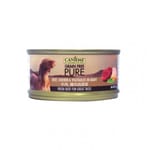
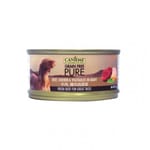
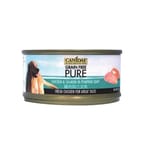
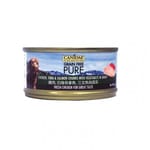
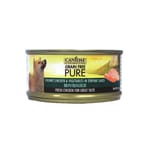
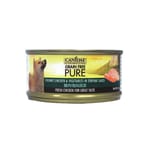
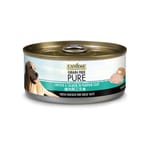
The CANIDAE wet dog food category offers various canned food options for canines. These products typically feature a blend of meats, vegetables, and other nutritional components, formulated to provide dogs with their daily energy and nutrient requirements. CANIDAE wet dog food recipes may be adapted for different life stages, such as specific formulas for puppies or senior dogs, addressing their distinct dietary needs. Canned foods generally have a higher moisture content and a palatable texture, aiding in canine hydration. This category includes a range of flavors and ingredient combinations, presenting owners with diverse choices. Whether served as a primary meal or alongside dry kibble, CANIDAE wet dog food serves as a supplement to a dog's diet. The products in this series are commonly presented in easy-to-store and serve canned packaging, preserving food freshness.
Canned dog food, such as CANIDAE Canned Dog Food, represents a category of commercially prepared pet sustenance designed for canine consumption. This product type typically consists of various animal proteins, grains, vegetables, and supplemental nutrients, processed and sealed in an airtight container to ensure preservation and maintain nutritional integrity.
This article aims to describe the structural attributes, material composition, and processing methods associated with canned dog food. The information presented focuses on the objective characteristics of the category, without providing product recommendations or comparing advantages among specific offerings.
CANIDAE Canned Dog Food: Common Divisions and Usage Contexts
The category of canned dog food is commonly divided based on several factors, primarily reflecting the intended dietary purpose or the life stage of the canine recipient. One frequent division is by life stage, including formulas designed for puppies, adult dogs, and senior dogs. Puppy formulas often feature higher calorie and protein densities to support growth and development, while senior dog food formulations, sometimes referred to as CANIDAE Senior Dog Food, may emphasize ingredients that support joint health and digestion. Another common classification mechanism is based on specific dietary needs, such as grain-free options which exclude common grain ingredients like corn, wheat, and soy. Furthermore, canned dog food can be categorized by its primary protein source, such as beef, chicken, or fish, which can be relevant for dogs with specific protein sensitivities or preferences. The consistency of the product also serves as a division point, with some products presenting as pâtés, others as shredded meat in gravy, or as stews containing larger chunks of ingredients. These structural variations influence how the food is consumed and can be a factor in palatability for individual dogs.
CANIDAE Canned Dog Food: Material Composition and Processing Techniques
The material composition of CANIDAE Canned Dog Food, and canned dog food in general, typically involves a primary protein source, often supplemented by other animal-derived ingredients, plant-based components, and a blend of vitamins and minerals. Primary protein sources frequently include muscle meat and organ meats from chicken, beef, lamb, or fish. These are selected for their amino acid profiles and caloric density. Plant-based components can include various vegetables such as peas, carrots, and sweet potatoes, which contribute fiber, vitamins, and carbohydrates. Grains like rice or oats may also be present, unless the product is specifically formulated as grain-free. Fats, often from animal sources or plant oils, are incorporated to provide essential fatty acids and energy. The processing technique for canned dog food begins with the mixing of raw ingredients according to a specific recipe. This mixture is then placed into metal cans, which are subsequently sealed. The sealed cans undergo a sterilization process, typically involving high heat and pressure, known as retorting. This thermal processing serves to kill bacteria and other microorganisms, ensuring the product's safety and extending its shelf life without the need for refrigeration until opened. The retorting process also cooks the ingredients, making them digestible for dogs. The specific temperature and duration of the retorting process are precisely controlled to achieve commercial sterility while minimizing nutritional degradation. The resulting texture can vary significantly based on the initial ingredient preparation, ranging from finely ground pâtés to larger pieces suspended in gravy or broth. This manufacturing approach ensures uniform product quality and safety across batches of CANIDAE Canned Dog Food.
CANIDAE Canned Dog Food: Property Variations Across Usage Environments
The properties of CANIDAE Canned Dog Food can exhibit variations depending on the environmental conditions or specific usage contexts. For instance, the palatability and texture of the product, while intrinsically determined by its formulation, can be influenced by storage conditions prior to opening. Extreme temperature fluctuations, though not compromising the safety of properly sealed cans, might subtly alter the textural consistency or aroma upon opening. Once opened, exposure to air initiates oxidation processes, and refrigeration becomes necessary to slow bacterial growth and maintain product integrity. The moisture content, a defining characteristic of canned dog food, remains consistent until the can is opened. This high moisture content, typically between 75% and 85%, contributes to hydration for dogs, particularly beneficial for those with insufficient water intake. In contrast to dry kibble, the higher moisture level of canned dog food can be particularly advantageous in warmer climates or for dogs with certain health conditions requiring increased fluid intake. The nutrient stability within the sealed can is primarily a function of the retorting process, which inactivates enzymes and microorganisms that would otherwise degrade vitamins and other sensitive nutrients over time. Consequently, the nutritional profile of CANIDAE Canned Dog Food is designed to remain stable throughout its designated shelf life under typical storage conditions, meaning a cool, dry place away from direct sunlight. The physical form of the product, whether pâté or chunks in gravy, also influences its suitability for different feeding scenarios, such as being mixed with dry food or served as a standalone meal, which can be affected by ambient temperatures in terms of how quickly it might dry out once exposed to air.
CANIDAE Canned Dog Food: Product Information from Sales Ranking
Product information based on sales ranking provides insight into the characteristics of specific CANIDAE Canned Dog Food formulations that have been available. The following descriptions focus on material, formula, and structural attributes of these products, without making any value judgments or recommendations.
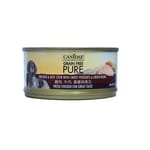
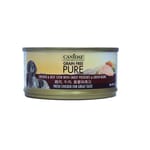
Rank 1: CANIDAE PURE Canned Dog Food Beef, Chicken & Vegetables in Gravy 70g (Discontinued) — This formulation featured beef and chicken as primary protein sources, combined with various vegetables. The ingredients were suspended in a gravy, indicating a higher moisture content and a saucier consistency. The 70g size suggests a portion intended for smaller dogs or as a meal topper. The "PURE" designation typically indicates a limited ingredient formula, designed to minimize potential allergens by excluding common ingredients like corn, wheat, and soy.
Rank 2: CANIDAE PURE Canned Dog Food Beef, Chicken & Vegetables in Gravy 156g (Discontinued) — Similar in material composition to the 70g version, this product also contained beef, chicken, and vegetables in a gravy base. The 156g size represents a larger portion, suitable for medium-sized dogs or as a more substantial meal component. The gravy consistency implies a palatable texture and contributes to hydration. The limited ingredient approach, as indicated by "PURE," targets dogs with sensitivities.
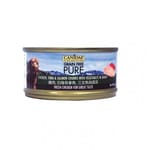
Rank 3: CANIDAE PURE Canned Dog Food Chicken & Salmon in Pumpkin Soup 70g (Discontinued) — This formulation featured chicken and salmon as the main protein sources. Pumpkin was included, likely contributing fiber and acting as a carbohydrate source. The term "Pumpkin Soup" suggests a very high moisture content and a liquid-rich consistency, differing from a traditional gravy in viscosity. The 70g unit size again indicates a smaller portion. The combination of chicken and salmon offers a diverse amino acid profile, and the "PURE" label signifies a carefully selected, minimal ingredient list.
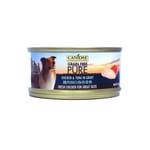
Rank 4: CANIDAE PURE Canned Dog Food Chicken & Tuna Gravy 70g (Discontinued) — This product utilized chicken and tuna as its primary protein components, presented within a gravy. The inclusion of tuna suggests the presence of omega-3 fatty acids. The 70g portion size is consistent with smaller meal supplements or for petite dog breeds. The gravy format adds to the food's palatability and moisture content, and the "PURE" designation denotes a focused ingredient panel.
Rank 5: CANIDAE PURE Canned Dog Food Chicken & Tuna Gravy 156g — This formulation features chicken and tuna as the core protein elements, prepared in a gravy. This product is a larger version of the previously described chicken and tuna offering. The 156g can provides a more substantial serving, suitable for larger dogs or as a complete meal. The gravy contributes to the overall moisture level, and the "PURE" characteristic specifies a limited number of ingredients in the formula, aiming to reduce potential sensitivities. This CANIDAE Canned Dog Food variant remains available.
CANIDAE Canned Dog Food: Quality Standards and Labeling Transparency
The quality standards for CANIDAE Canned Dog Food, as with other commercially produced pet foods, are subject to regulatory oversight and industry guidelines. In many regions, organizations such as the Association of American Feed Control Officials (AAFCO) in the United States establish nutritional standards and labeling requirements for pet food products. AAFCO provides nutrient profiles for dog food based on life stage (e.g., growth/reproduction, adult maintenance), ensuring that products labeled as "complete and balanced" meet specific nutritional adequacy requirements. This means the food contains all necessary nutrients in appropriate ratios for the intended life stage. Labeling transparency is a key aspect of these standards. Product labels for CANIDAE Canned Dog Food typically include an ingredient list, presented in descending order by weight, providing information on the primary components. This allows consumers to identify protein sources, carbohydrate sources, fats, and any added vitamins or minerals. The guaranteed analysis panel on the label specifies the minimum percentages of crude protein and crude fat, and the maximum percentages of crude fiber and moisture. These figures provide a quantitative overview of the product's macronutrient composition. Additionally, labels often include feeding guidelines, which provide a starting point for determining appropriate portion sizes based on a dog's weight and activity level. Manufacturing facilities are also subject to inspection to ensure compliance with good manufacturing practices (GMPs), which cover aspects such as sanitation, raw material handling, and quality control procedures. The "PURE" designation often seen on CANIDAE Canned Dog Food products refers to specific formulation choices, typically indicating a limited ingredient diet designed to reduce common allergens.
CANIDAE Canned Dog Food: Factual Insights
A verifiable factual insight regarding CANIDAE Canned Dog Food, and canned dog food in general, pertains to the actual cooking process involved. While often perceived as "raw" or minimally processed due to its wet nature, canned dog food undergoes a significant thermal treatment. The ingredients are cooked inside the can during the retorting process, which is a method of heat sterilization. This process renders the food commercially sterile, meaning it is free from disease-causing microorganisms and spoilage organisms under normal non-refrigerated storage conditions until opened. This high-temperature, high-pressure cooking is distinct from home canning methods and ensures a shelf-stable product without the need for synthetic preservatives to prevent microbial growth. Another insight concerns the "grain-free" designation, which is relevant to discussions around CANIDAE Grain-Free Dog Food. While often associated with reducing allergens, the primary scientific basis for a grain-free diet is typically related to specific canine sensitivities. Grains themselves are not inherently detrimental to dogs; rather, the concern lies with individual sensitivities or allergies to specific grain proteins. Many grain-free formulations substitute grains with other carbohydrate sources such as peas, lentils, or sweet potatoes. The caloric and carbohydrate content of these alternative sources can be comparable to or even higher than traditional grains, depending on the specific formulation of the CANIDAE Canned Dog Food.
The preceding information has provided a structural and compositional overview of canned dog food, with specific references to CANIDAE Canned Dog Food products. The discussion focused on defining characteristics, material components, processing methods, and relevant industry standards, without venturing into product performance or suitability for individual pets.
......View All