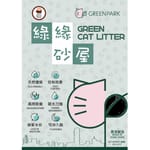
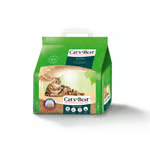
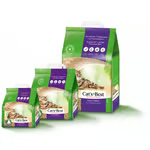
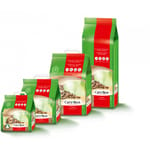
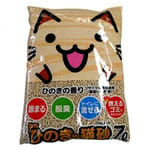
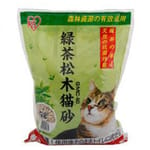
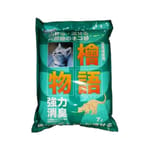
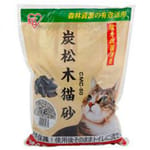
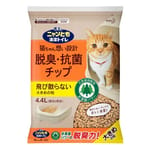
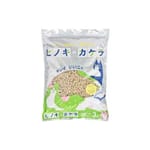
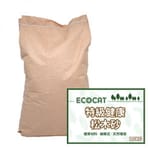
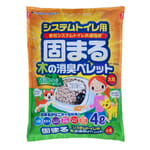
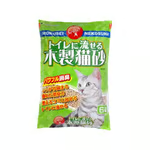
Wood cat litter is a common type of cat litter primarily derived from wood, such as pine cat litter. This category of litter typically comes in pellet or stick forms, possessing absorbency and clumping capabilities. The production process for wood cat litter generally involves processing wood into chips or compressing it into shapes, facilitating use and cleaning for cats. Some wood cat litter products may incorporate natural ingredients like plant starches to enhance their functionality, for instance, tapioca litter. The characteristics of wood cat litter make it one option for managing feline waste, with diverse materials and forms available to meet various usage requirements. When selecting wood cat litter, users consider factors such as its absorbency, clumping ability, and ease of cleaning.
Wood cat litter is a granular substrate derived from wood materials, primarily employed for the absorption of feline waste within litter boxes.
This article aims to delineate the structural attributes, material composition, and usage context of wood cat litter. It does not provide product recommendations or comparative advantages.
Wood Cat Litter Subdivisions
The classification of wood cat litter often involves distinctions based on the primary wood source and the processing methods applied. One common subdivision involves the species of wood utilized, such as pine or cedar. Another significant differentiator is the physical form of the litter, which can range from compressed pellets to more granular or crumbled textures. For instance, some formulations consist of finely ground wood fibers, while others are manufactured as uniform, cylindrical pellets. The inclusion of binding agents or other additives also defines certain subcategories. The particle size distribution within a specific product can influence its functional characteristics, leading to further classification. A product described as coarse cat litter, for example, denotes a larger particle size compared to finer variants. These structural variations are directly related to the manufacturing processes employed, which dictate the final physical properties of the wood cat litter. Furthermore, the intended mechanism of waste management, whether clumping or non-clumping, establishes another layer of classification within the broader category of wood cat litter.
Wood Cat Litter Material Composition and Processing
The material composition of wood cat litter predominantly consists of wood fibers, typically sourced from various tree species. Pine cat litter, for example, is derived from pine trees, utilizing their inherent absorbency and natural aromatic compounds. The manufacturing process generally begins with the collection of wood waste, such as sawdust or wood shavings, which are byproducts of other industries. This raw material undergoes cleaning and drying to remove impurities and reduce moisture content. Subsequently, the dried wood is often subjected to high pressure and heat to form compressed pellets. This process, known as extrusion, compacts the wood fibers into dense, uniform shapes, which contributes to their structural integrity and absorption capacity. In some instances, particularly for formulations aiming for a more granular texture, the wood may be further milled or shredded after initial processing. Certain wood cat litter products may incorporate natural starches or other plant-based binders to enhance clumping properties. These additives are introduced during the mixing phase before pelletization or granulation. The absence of artificial fragrances or chemical additives is a characteristic of many natural wood cat litter products, relying instead on the intrinsic properties of the wood itself for odor control. The wood materials undergo rigorous quality control to ensure consistency in particle size and moisture levels, which directly impact the performance of wood cat litter in absorbing liquids and containing odors. The specific wood species and processing techniques dictate the final structural form and material attributes of the wood cat litter.
Wood Cat Litter Properties Under Usage Conditions
The properties of wood cat litter manifest differently depending on the specific usage conditions within a litter box environment. When exposed to liquid waste, the wood fibers absorb moisture, causing them to swell and often disintegrate. This process is particularly evident in pelletized wood cat litter, where the pellets absorb liquid and then break down into sawdust or smaller particles. The rate and extent of this disintegration are influenced by factors such as the initial density of the pellets and the specific wood species used. Odor control in wood cat litter is primarily achieved through the natural absorption capabilities of the wood and the presence of volatile organic compounds inherent to certain wood types, such as pine. These compounds can neutralize or mask odors. The dust level produced by wood cat litter can vary significantly, depending on the manufacturing process and the final particle size. Finer particles tend to generate more dust during agitation, while coarser cat litter may produce less. The interaction of wood cat litter with solid waste involves its ability to encapsulate and dehydrate the waste, which contributes to odor containment. The ambient humidity and temperature of the usage environment can affect the absorption rate and the longevity of the wood cat litter's effectiveness. For instance, higher humidity might reduce the drying efficiency of the litter. The frequency of litter box cleaning also influences how the wood cat litter performs, as saturated material loses its absorbent properties. The structural integrity of the wood cat litter, whether in pellet or granular form, determines its resistance to tracking outside the litter box. Smaller, lighter particles are generally more prone to tracking. The overall efficacy of wood cat litter is a composite of its material composition, physical structure, and the environmental factors of its application.
Wood Cat Litter Product Information Based on Sales Ranking
The following descriptions detail the material, formulation, and structural characteristics of specific wood cat litter products, presented according to their sales ranking without assessment of quality or performance.
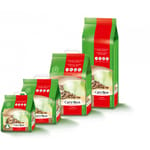
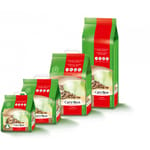
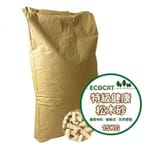
Rank 1: ECOCAT 特級健康環保崩解式松 木貓砂 15kg — This wood cat litter consists of pine wood fibers, processed into a form designed to disintegrate upon contact with liquid. The material is derived from natural wood sources. Its structural characteristic is based on compressed wood particles that break down into smaller, absorbent fragments. The formulation emphasizes the use of natural pine without additional chemical binders or artificial fragrances. The product is packaged in a 15kg quantity.
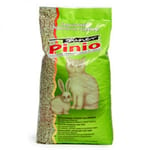
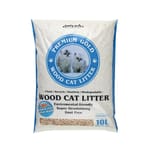
Rank 2: 波蘭SUPER PINIO純天然松 木貓砂 35L (PL003) — This wood cat litter is composed of pure natural pine wood. The manufacturing process results in a pelletized structure, typical of many pine cat litter products. The material is free from artificial additives, relying on the inherent properties of pine for absorption and odor management. The volume of the product is specified as 35 liters, indicating a volumetric measurement of the litter material. The "PL003" identifier likely refers to a specific product code or batch within the manufacturer's catalog.
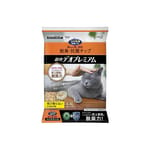
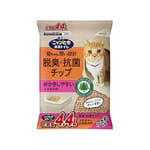
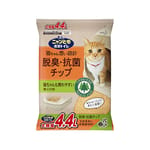
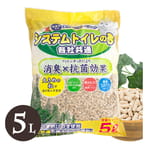
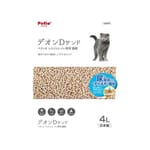
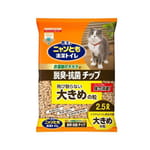
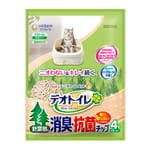
Rank 3: 日本花王脫臭抗菌大粒 木貓砂 4.4L (黃) — This wood cat litter features a large particle size, distinguishing it from finer grain offerings. The material is derived from wood and is formulated with components intended to address odor and microbial growth. The structural form consists of larger, distinct particles. The product is presented in a 4.4-liter volume. The "黃" (yellow) designation may indicate a specific packaging color or a variant within the product line, but does not inherently describe the material properties of the wood cat litter itself.
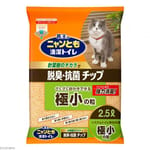
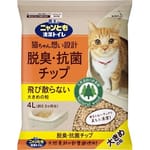
Rank 4: 日本花王脫臭抗菌大粒 木貓砂 2.5L (黃) — Similar to the Rank 3 product, this wood cat litter also exhibits a large particle size. Its composition includes wood materials and incorporates elements for odor reduction and antimicrobial action. The structural characteristics are defined by its substantial particle dimensions. This product is offered in a 2.5-liter volume. The "黃" (yellow) descriptor functions as a product identifier, consistent with the previous entry in the ranking.
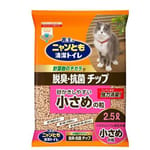
Rank 5: 日本花王脫臭抗菌小粒 木貓砂 2.5L (粉紅) — This wood cat litter is characterized by a small particle size, providing a different texture compared to its "large particle" counterparts. The material base is wood, and it is formulated with agents for deodorization and bacterial inhibition. The structural form is granular with fine particles. The product volume is 2.5 liters. The "粉紅" (pink) designation serves as a product identifier, indicating a specific variant or packaging color for this fine-grained wood cat litter.
Wood Cat Litter Quality Standards and Labeling
Verifiable quality standards for wood cat litter primarily focus on material purity, moisture content, particle size consistency, and the absence of harmful contaminants. Manufacturers often adhere to internal specifications to ensure uniformity across production batches. For instance, the percentage of wood fines (very small particles) within a batch of pelletized wood cat litter is typically controlled to minimize dust generation. Moisture content standards are critical, as excessive moisture can reduce absorption capacity and promote microbial growth. Labeling transparency commonly involves disclosing the primary wood species used, such as "pine cat litter" or "fir wood litter." The presence of any additives, such as natural binders or odor-neutralizing agents, is also typically indicated on product packaging. Information regarding the manufacturing process, such as whether the wood is sustainably sourced, may also be included, often supported by certifications from relevant forestry organizations. Packaging labels frequently specify the volume or weight of the wood cat litter contained within, providing quantitative data for consumers. Instructions for disposal and recommended usage guidelines are also standard inclusions. Some products may carry certifications indicating their biodegradability or compostability, which are based on specific testing protocols and environmental standards. The declaration of dust levels, while not universally standardized, is sometimes provided by manufacturers as an indicator of product quality. The absence of artificial fragrances, dyes, or chemical binders is often a key claim on the labeling of natural wood cat litter. These labeling practices aim to provide factual information about the product’s composition and characteristics.
Verifiable Insights into Wood Cat Litter
One verifiable factual insight regarding wood cat litter pertains to its origin as a byproduct. A significant portion of wood cat litter, including pine cat litter, is manufactured using sawdust and wood shavings that are residual materials from the timber and lumber industries. This utilization of industrial waste streams contributes to a circular economy model by repurposing materials that might otherwise be discarded. The processing of these wood byproducts into cat litter involves mechanical and thermal treatments, rather than requiring the felling of trees specifically for litter production. This characteristic distinguishes it from products that rely on primary resource extraction. Another verifiable insight is related to the physical transformation of wood cat litter upon hydration. When wood cat litter, particularly in pelletized form, absorbs liquid, the cellulose and hemicellulose components within the wood fibers swell and lose their structural rigidity. This process leads to the physical breakdown of the pellets into a finer, sawdust-like consistency. This disintegration is a fundamental property that dictates how the litter manages liquid waste and influences the removal process during litter box maintenance. The degree of disintegration varies based on the wood species, the density of the pellets, and the specific manufacturing methods employed, but the underlying principle of fiber swelling and breakdown remains consistent across different types of wood cat litter.
This document has outlined the structural attributes, material composition, and usage context of wood cat litter. It has provided information on common subdivisions, processing techniques, and the behavior of the material under various conditions. The product information presented is strictly based on sales ranking data, detailing only verifiable material and structural characteristics. Quality standards and labeling norms have also been described. This article maintains a factual and neutral presentation, abstaining from any form of recommendation or comparative assessment of products.
......View All