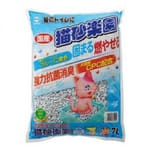
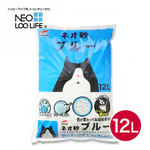
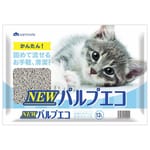
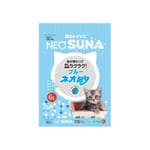
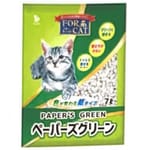
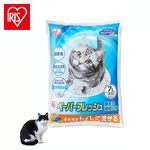
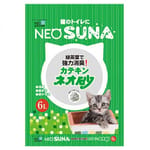
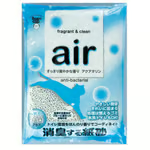
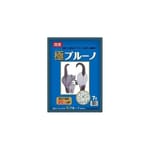
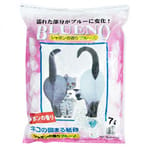
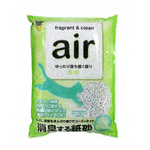
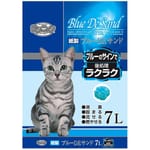
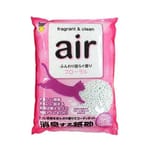
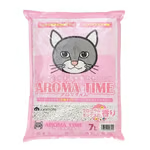
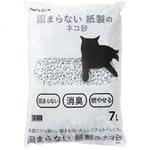
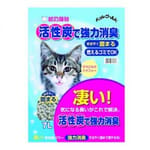
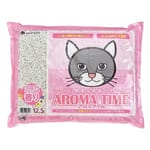
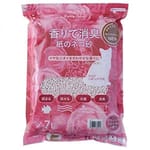
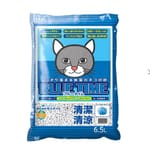
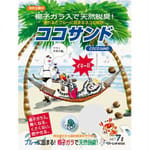
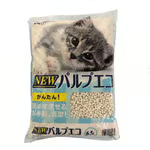
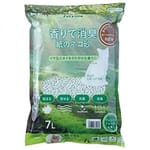
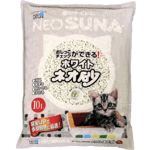
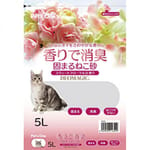
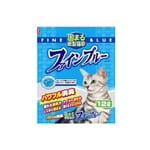
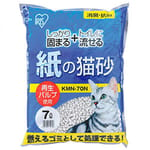
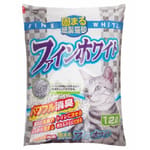
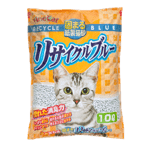
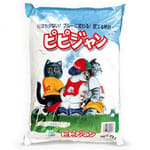
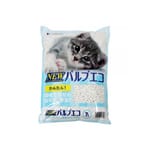
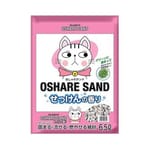
Discover premium paper cat litter, designed to provide a clean and comfortable restroom experience for your feline companion. Paper cat litter is renowned for its excellent absorbency and odor control, effectively locking away unpleasant smells to maintain a fresh home environment. This type of litter is lightweight and easy to manage, with some varieties being flushable, greatly simplifying the cleaning process. The brands featured prioritize eco-friendly materials, ensuring minimal dust and hypoallergenic properties to safeguard your cat's respiratory health. Options like Iris, QQ Kit eco-friendly, and V-Dog paper cat litter offer diverse choices to meet various needs. Opting for quality paper cat litter enhances your cat's well-being and offers convenience and peace of mind for pet owners.
Paper cat litter is a granular material designed for feline waste management, typically manufactured from recycled paper fibers or other cellulose-based sources.
This article aims to delineate the structural attributes, material composition, and various usage contexts associated with the category of paper cat litter. The information presented herein is strictly objective and verifiable, focusing on the intrinsic properties of these products rather than offering purchasing advice or comparative evaluations.
Understanding Paper Cat Litter Subdivisions
The classification of paper cat litter often involves distinctions based on its foundational material, processing methods, and intended functional characteristics. While the overarching category is defined by its primary component, further subdivisions emerge from specific manufacturing techniques that impart varying structural integrity and absorption capabilities. One common distinction relates to the form of the paper material, which can range from shredded particles to compressed pellets. Another classification criterion involves the inclusion of additional components, such as deodorizing agents or indicators that change color upon contact with moisture. These structural variations contribute to the diverse array of products available within the paper cat litter segment.
Material Composition and Paper Cat Litter Formulation
The material composition of paper cat litter predominantly involves cellulose fibers derived from paper. These fibers are typically sourced from post-consumer recycled paper, such as newspapers, corrugated cardboard, or office paper. The manufacturing process often begins with pulping, where the paper is broken down into a fibrous slurry. This slurry then undergoes a series of treatments, including de-inking and sterilization, to remove contaminants and ensure hygiene. Following these preparatory steps, the fibers are processed into their final granular or pelletized form. Binders, often starch-based, may be incorporated during the formation stage to enhance structural cohesion and durability of the individual particles. Some formulations also include natural deodorizers, such as baking soda or activated carbon, which are integrated into the paper matrix during production. The specific type of paper used and the extent of its processing directly influence the final properties of the paper cat litter, including its absorption rate and particle density. For instance, highly compressed pellets generally possess greater density and structural integrity compared to loosely shredded paper forms. The presence of activated carbon is a material characteristic noted in some paper cat litter products.
Variations in Paper Cat Litter Under Different Usage Contexts
The performance characteristics of paper cat litter can exhibit variations when subjected to different environmental conditions and usage patterns. For instance, the moisture absorption capacity of paper cat litter is a primary functional attribute, and this capacity can be influenced by ambient humidity levels. In environments with higher humidity, the material may absorb atmospheric moisture, potentially reducing its efficiency when exposed to feline waste. The structural integrity of the individual particles also plays a role; highly friable forms of paper cat litter may break down more rapidly under the mechanical stress of cat activity, leading to increased dust generation. Conversely, denser pellets tend to maintain their structural form for longer periods. The efficacy of integrated deodorizing agents in paper cat litter can also be affected by air circulation within the litter box environment. Confined spaces with limited airflow may allow odors to accumulate more readily, irrespective of the deodorizer's presence. The frequency of waste removal and the quantity of liquid waste deposited are further factors that influence the overall performance and longevity of paper cat litter in a given usage context. Understanding these interactions is crucial for comprehending the material's behavior in practical applications.
Paper Cat Litter Product Characteristics Based on Sales Ranking
This section details the material, formulation, and structural characteristics of specific paper cat litter products, presented in order of their reported sales ranking. The descriptions are based solely on verifiable product attributes and do not include any subjective evaluations or recommendations. The information aims to provide a factual overview of each product's construction.
Rank 1: 日本Hitachi Fine Blue 變色消臭 紙貓砂 12L — This paper cat litter is characterized by its color-changing properties upon contact with moisture, indicating saturation. It incorporates deodorizing agents within its formulation. The material base is derived from paper fibers, processed into a granular form. The volume is specified as 12 liters. The inclusion of a color-change indicator is a specific structural attribute.
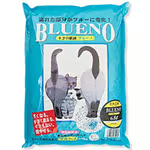
Rank 2: BLUENO變藍再生 紙貓砂 原味 10L (P21) — This paper cat litter is presented as a regenerative product, suggesting a manufacturing process that utilizes recycled materials. It is described as "original flavor," indicating the absence of added scents. The primary material is paper, formed into absorbent particles. The product volume is 10 liters. The "regenerative" aspect points to its material sourcing and processing.
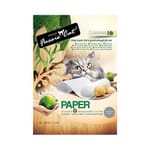
Rank 3: Fussie Cat 高竇貓 紙貓砂 原味 7L (FC-P1) — This paper cat litter is an unscented formulation, designated as "original flavor." Its composition relies on paper materials, likely processed into pellets or granules for absorption. The product is packaged in a 7-liter volume. Its structural form is designed for waste absorption.
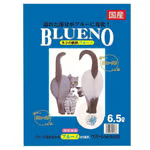
Rank 4: 日本BLUENO變藍再生 紙貓砂 原味 6.5L (P20) — Similar to the higher-ranked BLUENO product, this paper cat litter emphasizes its "regenerative" nature, signifying the use of recycled paper fibers in its production. It is an unscented variant, labeled "original flavor." The material is processed paper, configured for feline waste absorption. The volume specified for this product is 6.5 liters.
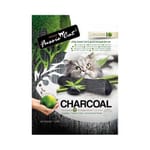
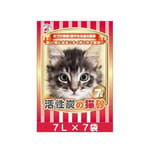
Rank 5: Fussie Cat 高竇貓 紙貓砂 活性炭 7L (FC-CP1) — This paper cat litter distinguishes itself by the incorporation of activated carbon into its formulation. Activated carbon is a material known for its adsorptive properties, typically used for odor control. The base material consists of paper fibers, structured into an absorbent form. The product volume is 7 liters. The presence of activated carbon is a key material characteristic.
Quality Standards and Labeling for Paper Cat Litter
The quality standards and labeling practices for paper cat litter products generally encompass several aspects, focusing on material composition, functional attributes, and safety. While specific international standards may vary, common elements often include declarations regarding the primary raw materials, such as recycled paper content. Manufacturers frequently provide information on the absence of certain additives, such as synthetic fragrances or dust-generating agents, which can be relevant to consumer perception of product safety. Labeling typically specifies the volume or weight of the product, along with instructions for proper disposal, which can range from flushable claims to recommendations for landfill disposal. Some paper cat litter products may carry certifications related to their environmental impact, such as those indicating sustainable sourcing or biodegradability. For example, some products might be labeled as "eco-friendly paper cat litter," indicating adherence to specific environmental criteria in their production. Transparency in labeling often includes a list of constituent materials, allowing consumers to verify the product's composition. The inclusion of specific functional claims, such as "odor control" or "high absorbency," is also common, and these claims are often substantiated through internal testing by manufacturers. The use of terms like "paper cat litter PTT" in discussions may refer to consumer forums where these product claims are discussed.
Factual Insights Regarding Paper Cat Litter
One verifiable factual insight regarding paper cat litter involves its manufacturing origin. A significant portion of paper cat litter products are derived from post-consumer waste paper, which contributes to waste diversion efforts. The process of converting waste paper into an absorbent material for feline waste management involves mechanical and chemical treatments to ensure hygiene and structural integrity. Another factual insight pertains to the density variations across different forms of paper cat litter. Pelletized forms, which are produced by compressing paper fibers, typically exhibit a higher bulk density compared to shredded or granulated forms. This difference in density directly influences the volume-to-weight ratio of the product, impacting factors such as packaging and transport. The material's capacity to absorb liquid is also a measurable property, with variations observed based on fiber type and processing. Further, the inclusion of certain additives, like activated carbon, is a specific material modification intended to enhance odor absorption capabilities, a property that can be quantified through laboratory testing. The market includes various brands, such as Iris paper cat litter and Victor Pet paper cat litter, reflecting the diversity of manufacturers producing this material. Discussions on "cat litter recommendations" often involve comparisons of these factual properties.
This document has provided a detailed examination of paper cat litter, focusing on its structural characteristics, material composition, and contextual behaviors. The aim has been to present objective, verifiable information about the category, without venturing into product comparisons or offering any form of selection guidance.
......View All