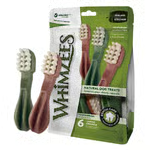
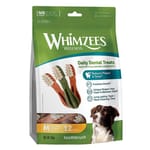
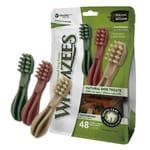
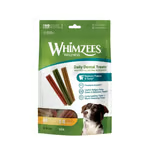
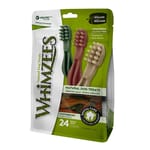
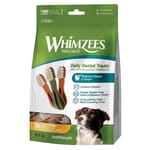
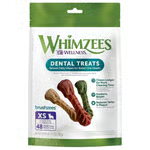
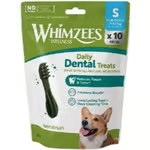
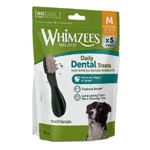
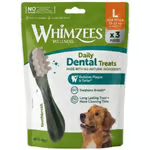
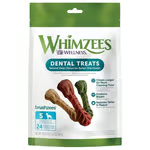
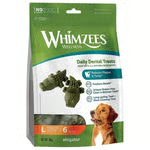
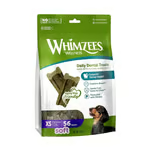
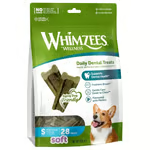
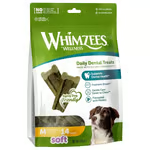
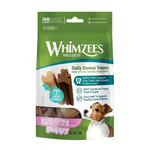
WHIMZEES dog treats are typically crafted from natural, plant-based ingredients, designed to offer dogs an engaging chewing experience. These products are distinguished by their unique shapes and textures, commonly appearing as bones, alligators, or toothbrushes. The composition of WHIMZEES dog treats generally includes potato starch, glycerin, powdered cellulose, lecithin, malt extract, and yeast, free from artificial colors, flavors, or preservatives. The texture of these treats is typically firm, facilitating a degree of dental cleaning as dogs chew. This category of products is suitable for dogs of various sizes and ages, with multiple size options available to meet individual requirements. When selecting, consumers can choose appropriate WHIMZEES dog treats based on their dog's weight and chewing habits, considering options like those found in the Wellness Whimzees range. The primary function of these treats is to serve as rewards or daily supplemental snacks, satisfying a dog's natural chewing instinct.
Dog dental chews are a category of edible products designed to assist in the mechanical abrasion of dental plaque and tartar from a dog's teeth. These products are formulated and structured to encourage chewing behavior, which contributes to oral hygiene through physical contact with the tooth surfaces.
This article aims to describe the structural attributes, material composition, and usage contexts within the category of dog dental chews. It does not intend to recommend specific products or provide comparative analysis of their advantages.
Dog Dental Chews: Classification by Form Factor and Intended Application
The category of dog dental chews is commonly divided based on their physical form factor and the specific dental hygiene aspects they are designed to address. One primary classification distinguishes between chews that are primarily abrasive and those that also incorporate ingredients aimed at inhibiting bacterial growth or reducing halitosis. Abrasive chews often feature textured surfaces, ridges, or nubs engineered to maximize contact with tooth surfaces during mastication. These structural elements are designed to scrape away plaque and stimulate gum tissue. Another common distinction is made according to the size and chewing strength of the dog, with products often labeled for mini, small, medium, large, and extra-large breeds. This ensures that the chew provides an appropriate level of resistance and durability for the intended recipient. Furthermore, some dog dental chews are categorized by their frequency of use, such as daily dental chews or occasional supplemental chews. This classification often relates to the chew's caloric content and its overall contribution to the dog's daily nutritional intake. The material density and structural integrity also play a role in how these products are classified, with some being softer for puppies or older dogs, and others being much harder for vigorous chewers. The WHIMZEES dog dental chews illustrate these distinctions.
Dog Dental Chews: Material Composition and Processing Techniques
The material composition of dog dental chews is central to their function and structural integrity. Common ingredients often include plant-based starches such as potato starch, pea flour, or tapioca starch, which provide a digestible and pliable base. Glycerin is frequently incorporated for its humectant properties, contributing to the chew's texture and preventing excessive brittleness. Cellulose powder, derived from plant fibers, is often added to enhance the abrasive action and provide dietary fiber. Lecithin, an emulsifier, assists in binding ingredients and improving the overall consistency of the product. Specific formulations for dog dental chews may include natural colorants derived from alfalfa, spirulina, or malt extract, which also sometimes contribute to the flavor profile. Minimal fat content, often from vegetable sources, is typical to ensure the product remains a low-calorie addition to a dog's diet. The manufacturing process typically involves extrusion, where a mixture of ingredients is forced through a die under high pressure and temperature to create various shapes and sizes. This process gelatinizes starches, forming a dense, chewy texture. Subsequent drying steps remove moisture to achieve the desired firmness and shelf stability. The precise control over ingredient ratios and processing parameters allows for a range of textures, from relatively soft to highly resilient, catering to different chewing preferences and dental needs. The structural design, such as brushes, sticks, or other geometric shapes, is directly influenced by the extrusion die used. The WHIMZEES dog dental chews provide examples of varied shapes and compositions.
Dog Dental Chews: Properties Across Usage Environments
The properties of dog dental chews can vary based on the specific usage environment and conditions, primarily concerning factors such as storage, moisture exposure, and the dog's individual chewing habits. When stored in environments with high humidity, some chews may absorb moisture, potentially altering their texture and reducing their intended abrasiveness. Conversely, excessively dry conditions can lead to increased brittleness, which might affect the chew's durability and how effectively it scrapes teeth. Temperature fluctuations can also influence the chew's consistency; colder temperatures may make a chew harder, while warmer temperatures could soften it. The structural integrity of a dog dental chew is also influenced by the dog's chewing style. A dog that gnaws slowly and meticulously will interact with the chew differently than one that attempts to break it down rapidly. This interaction determines the rate of wear and the extent of the mechanical cleaning action. The hardness and density of the chew are designed to provide resistance, which is essential for effective plaque removal, but this resistance must be appropriate for the dog's jaw strength to prevent dental injury. The WHIMZEES dog dental chews are designed with consideration for varied chewing dynamics.
Dog Dental Chews: Product Characteristics from Sales Ranking
This section details the material, formulation, and structural characteristics of specific dog dental chews based on their sales ranking. These descriptions are purely factual and do not imply any product recommendations or comparative advantages.
Rank 1: WHIMZEES Large Dog High-Efficiency Dental Chew White Brush Head, 6 pieces (WHZ304) — This product features a brush-head shape designed to maximize surface area contact with the teeth. The formulation primarily consists of plant-based ingredients, including potato starch, glycerin, powdered cellulose, lecithin, yeast, malt extract, and alfalfa extract for natural color. The structured form is intended to provide mechanical abrasion during chewing. The chew is designed for large dog breeds, indicating a specific density and size to accommodate larger jaw structures and chewing forces. The white color is derived from its base ingredients and lack of additional colorants.
Rank 2: WHIMZEES Mini Dog High-Efficiency Dental Chew, 48 pieces (WHZ301) — These dog dental chews are formulated with similar plant-based ingredients as the larger variants, including potato starch, glycerin, powdered cellulose, lecithin, yeast, malt extract, and alfalfa extract. The mini size is specifically proportioned for very small dog breeds, ensuring appropriate chew density and dimensions for their oral cavity and chewing strength. The structure is typically a standard stick or brush shape, adapted for smaller mouths to facilitate effective dental contact. The quantity of 48 pieces suggests a bulk packaging for regular use.
Rank 3: WHIMZEES Hexagonal Medium Dog Classic Dental Chew, 14 pieces mixed colors, 420g — This product features a hexagonal shape, which provides multiple ridges and angles for varied tooth contact. The formulation includes potato starch, glycerin, powdered cellulose, lecithin, yeast, malt extract, annatto extract, and alfalfa extract, with the latter two contributing to the mixed coloration. These dog dental chews are sized for medium dog breeds, offering a balance between durability and chewability. The mixed colors are a result of natural plant extracts and do not indicate flavor variations. The 420g weight indicates the total mass of the 14 pieces.
Rank 4: WHIMZEES Medium Dog High-Efficiency Dental Chew White Brush Head, 12 pieces (WHZ303) — Similar to the large dog variant, this product also incorporates a brush-head design, scaled for medium-sized dogs. Its composition is based on plant-derived ingredients such as potato starch, glycerin, powdered cellulose, lecithin, yeast, and malt extract. The white appearance signifies the absence of additional colorants beyond the natural hues of the base ingredients. The brush-head structure is crafted to engage with the dog's teeth and gums during chewing, promoting mechanical cleaning. The 12-piece count indicates a standard package size for this specific product.
Rank 5: WHIMZEES Small Dog High-Efficiency Dental Chew, 24 pieces, 12.7oz (WHZ302) — These dog dental chews are designed for small dog breeds, providing a suitable size and texture for their chewing capabilities. The primary ingredients are plant-based, encompassing potato starch, glycerin, powdered cellulose, lecithin, yeast, and malt extract. The structure is typically a stick or brush shape, optimized for smaller oral anatomies to ensure effective interaction with tooth surfaces. The 24-piece count and 12.7oz (approximately 360g) weight indicate a package size intended for consistent use. The formulation aims to maintain a consistent density appropriate for small dog chewing.
Dog Dental Chews: Quality Standards and Labeling Transparency
The quality standards and labeling transparency for dog dental chews are subject to regulatory oversight in various regions, primarily focusing on ingredient safety, manufacturing practices, and accurate product representation. In the United States, for instance, these products fall under the purview of the Food and Drug Administration (FDA) as animal feed, requiring adherence to good manufacturing practices (GMPs). Ingredients must be generally recognized as safe (GRAS) or approved for use in animal feed. Labeling requirements typically mandate a guaranteed analysis, which specifies minimum percentages of crude protein and crude fat, and maximum percentages of crude fiber and moisture. The ingredient list must be provided in descending order by weight. It is also common for dog dental chews to carry certifications from independent bodies, such as the Veterinary Oral Health Council (VOHC) seal, which indicates that a product meets pre-set standards for retarding plaque and tartar accumulation. Achieving a VOHC seal requires scientific data demonstrating the product's efficacy. Transparency in labeling extends to clearly stating the intended animal species and size, recommended feeding guidelines, and any caloric information. Manufacturers are also expected to provide contact information for consumer inquiries. The absence of artificial colors, flavors, and preservatives is often a claim highlighted on packaging, reflecting consumer preferences for natural ingredients. The specific structure of dog dental chews is often detailed, explaining how the design contributes to dental hygiene. Adherence to these standards ensures consumer confidence and product safety within the dog dental chews market.
Dog Dental Chews: Verifiable Factual Insights
Certain verifiable factual insights related to dog dental chews provide additional context regarding their development and function. One such insight pertains to the mechanical action. Studies have shown that the effectiveness of dog dental chews in reducing plaque and tartar is primarily attributed to the physical abrasion exerted on the tooth surface during chewing, rather than chemical agents. This mechanical cleaning effect is maximized by specific shapes and textures designed to rub against the teeth and gum line. The density and inherent resistance of the chew are critical factors in this process, as they dictate the duration and intensity of the cleaning action. Another factual insight concerns the caloric content. While dog dental chews are beneficial for oral hygiene, they are not calorie-free. Responsible feeding guidelines often emphasize that these chews contribute to a dog's daily caloric intake and should be factored into the overall diet to prevent overfeeding. The specific formulation and size of a dog dental chew directly influence its caloric density, which is often reported on product packaging. This information is crucial for owners managing their pet's weight and overall nutritional balance. The WHIMZEES dog dental chews, like others in the category, have their caloric values determined through standardized analytical methods.
This article has presented a structural and characteristic overview of dog dental chews, detailing classifications, material compositions, environmental considerations, and quality standards. The information provided is objective and derived from verifiable data, without offering any recommendations or comparative evaluations for product selection.
......View All