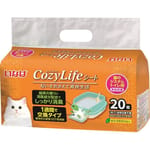
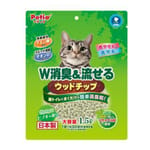
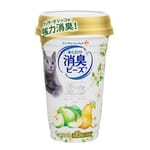
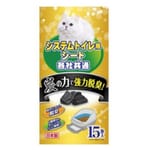
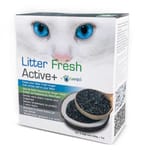
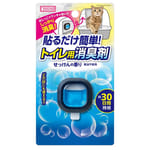
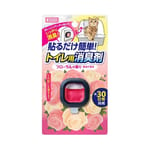
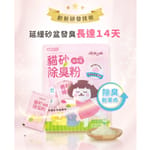
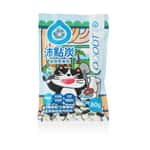
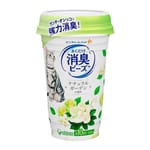
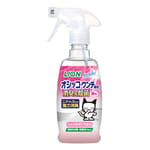
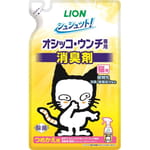
Cat litter box deodorizers are products specifically designed to mitigate unpleasant odors emanating from a cat's litter area. This category encompasses various forms primarily aimed at absorbing or neutralizing odor molecules around the litter box, thereby maintaining a fresh home environment. Common product types include sprays, powders, granular additives, or activated carbon sachets. These items are typically added directly to the cat litter, sprayed around the litter box, or placed nearby to take effect. The composition of cat litter box deodorizers varies; some utilize natural minerals such as zeolite or diatomaceous earth for odor absorption, while others employ plant extracts or probiotics to break down odor sources. The selection of these deodorizing products often depends on the type of litter used, the cat's sensitivity to scents, and the size of the living space. When choosing, factors like ingredients, application method, and mechanism of action can be considered. Many cat owners also explore options for cat supplies online shopping and seek recommendations for products like tofu cat litter to ensure a comfortable litter experience for their feline companions.
Cat litter box odor control products encompass a range of formulations designed to mitigate or neutralize unpleasant odors associated with feline waste within a litter box environment.
This article aims to provide a descriptive overview of the cat litter box odor control products category, focusing on structural attributes, material composition, and usage contexts. It does not offer product recommendations or comparative analyses of advantages.
Cat Litter Box Odor Control Products: Practical Divisions
The category of cat litter box odor control products is commonly divided based on their physical form and intended application method. One primary division is between granular or powdered additives and liquid or gel-based formulations. Granular products are typically mixed directly into the cat litter or sprinkled on top, designed for sustained release or absorption. Powdered forms, often finer in particle size than granular types, are also incorporated into the litter or applied to the litter box surface. Another classification distinguishes between products that absorb odors and those that chemically neutralize them, or those that mask odors through the release of a scent. Within the absorbent category, distinctions can be made based on the primary absorbent material, such as activated carbon, zeolites, or specific mineral compounds. Scented products are further differentiated by the type of fragrance compound utilized, which can range from synthetic aromas to essential oil derivatives. Some products combine multiple mechanisms, incorporating both absorbent particles and scent-releasing elements. This functional layering represents a further division within the practical application of cat litter box odor control products. The form factor also dictates the frequency and method of application, with some products designed for daily use and others for periodic, less frequent application. Certain formulations are specifically designed to adhere to the litter itself, preventing waste from sticking to the pan, thereby indirectly contributing to odor reduction by facilitating easier cleaning. The common divisions reflect the diverse approaches to addressing the challenge of odor management within a cat litter box. From a user's perspective, these divisions often guide choices based on desired application method and perceived efficacy against specific types of odors.
Cat Litter Box Odor Control Products: Material Composition and Formulation
The material composition of cat litter box odor control products varies significantly, reflecting different mechanisms of action. A common component in many formulations is activated carbon, a highly porous material known for its adsorption properties. Activated carbon is processed to create numerous microscopic pores, increasing its surface area, which allows it to trap odor molecules. Zeolites, another frequently used mineral, are aluminosilicate minerals with a porous structure that can absorb ammonia and other nitrogenous compounds, which are major contributors to litter box odors. Some products incorporate baking soda (sodium bicarbonate), a well-established household deodorizer that works by neutralizing acidic and basic odor molecules, bringing them closer to a neutral pH. Silica gel, a desiccant, is sometimes included for its ability to absorb moisture, which can inhibit bacterial growth responsible for odor production. Beyond these inorganic compounds, certain cat litter box odor control products utilize plant-based materials. These can include various plant extracts or essential oils, which function primarily as scenting agents to mask odors, though some may possess mild antimicrobial properties. Polymeric materials are also employed, particularly in products designed to prevent waste from sticking to the litter box, forming a non-stick barrier. The specific formulation often involves a blend of these materials, carefully proportioned to achieve a desired balance of odor absorption, neutralization, and scent release. For instance, a product might combine activated carbon for broad-spectrum odor adsorption with a zeolite for targeted ammonia control and a subtle fragrance for a perceived freshness. The manufacturing processes for these materials involve steps such as high-temperature activation for carbon, grinding and sizing for mineral components, and encapsulation for controlled release of scents. The particle size and surface treatment of these ingredients are crucial, influencing their efficacy and integration with various types of cat litter. Understanding the material composition provides insight into the functional basis of each cat litter box odor control product and its specific approach to odor management.
Cat Litter Box Odor Control Products: Usage Environments and Conditions
The properties and performance of cat litter box odor control products can vary significantly depending on the specific usage environment and conditions. Environmental factors such as ambient temperature, humidity levels, and air circulation play a substantial role. In high-humidity environments, for example, products relying on moisture absorption, like silica gel, might become saturated more quickly, reducing their long-term efficacy. Conversely, in very dry conditions, some scent-releasing formulations might dissipate faster. The temperature also influences the volatility of odor molecules and scent compounds; higher temperatures can accelerate the release of both unpleasant odors and masking fragrances. Ventilation is another critical factor; a well-ventilated area can help dissipate odors, potentially requiring less intensive cat litter box odor control products, while a poorly ventilated space necessitates more robust odor management solutions. The type of cat litter used also impacts product performance. Some odor control products are formulated to be compatible with specific litter types, such as clay, silica gel, or tofu litter. The particle size and absorbent capabilities of the primary litter can affect how well an odor control additive integrates and performs. For instance, a fine powder might clump effectively with a clay litter but could be less effective when mixed with a larger granule silica gel litter. The number of cats using the litter box and the frequency of litter box cleaning are also direct usage conditions affecting the lifespan and effectiveness of cat litter box odor control products. A multi-cat household or infrequent scooping will naturally produce more waste and a higher concentration of odors, necessitating more powerful or frequently applied odor control measures. Furthermore, dietary factors of the cat can influence the odor intensity and composition of waste, which in turn affects the performance requirements of odor control products. The design of the litter box itself, whether open-top, covered, or self-cleaning, also creates different micro-environments that influence air flow and odor retention, thereby impacting the perceived efficacy of any cat litter box odor control product. These varied conditions highlight the dynamic interplay between the product, the environment, and the specific needs of the cat and household.
Cat Litter Box Odor Control Products: Product Characteristics from Sales Ranking
This section presents characteristics of specific cat litter box odor control products based on their sales ranking, focusing solely on their material, formulation, and structural attributes.
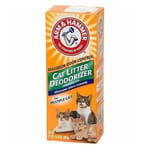
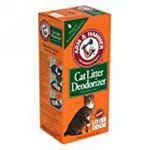
Rank 1: ARM & HAMMER Cat Litter Pan Deodorizer Powder 30oz (15027) — This product is a powdered formulation designed for direct application to cat litter. Its primary active ingredient is baking soda (sodium bicarbonate), known for its odor-neutralizing properties. The powder form allows for mixing into the litter or sprinkling on its surface, creating a layer that interacts with odor-causing compounds. The fine particle size of the powder facilitates even distribution throughout the litter. The formulation also includes a fragrance component, which contributes to odor masking.
Rank 2: ARM & HAMMER Cat Litter Pan Deodorizer Powder 20oz (15020) — This product shares the same core formulation and functional characteristics as the 30oz variant. It is a powdered cat litter box odor control product primarily composed of baking soda for chemical odor neutralization and includes a fragrance for odor masking. The only distinguishing feature is the net weight of the product, indicating a smaller unit size for application. Its powdered form is designed for integration within various types of cat litter.
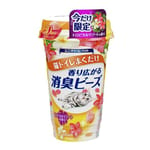
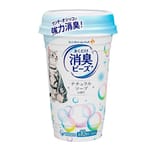
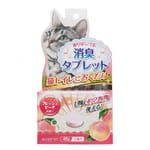
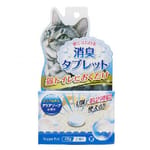
Rank 3: Unicharm Japanese Cat Litter Box Deodorizing Beads Blue Soap Scent 450ml — This product is presented in a bead or granule form, distinct from powdered formulations. The primary mechanism of action involves the controlled release of a blue soap scent, indicating a focus on odor masking rather than direct chemical neutralization or absorption by inert materials. The beads are designed to be mixed into or placed on top of the cat litter. The "450ml" designation refers to the volume of the product, suggesting a certain quantity of beads. The structural integrity of the beads allows for a gradual release of the scent over time.
Rank 4: Unicharm Japanese Cat Litter Box Deodorizing Beads Refreshing Shower Scent 450ml — Similar to the blue soap scent variant, this product is also composed of deodorizing beads. Its primary function is the release of a refreshing shower scent, indicating a fragrance-based approach to odor management. The physical form is granular, allowing for easy integration with cat litter. The 450ml volume indicates the packaged quantity. The beads are designed to provide sustained scent release, contributing to the overall odor profile of the litter box area. This cat litter box odor control product relies on scent to mitigate odor perception.
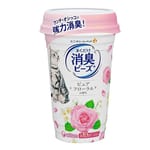
Rank 5: Unicharm Japanese Cat Litter Box Deodorizing Beads Pink Floral Scent 450ml — This product is structurally and functionally consistent with the other Unicharm deodorizing beads. It features a pink floral scent, which is the primary mechanism for odor mitigation through masking. The product consists of small, solid beads designed to be incorporated into cat litter. The 450ml volume specifies the container size. The beads are formulated for gradual fragrance dispersion, aiming to provide a consistent level of scent in the vicinity of the litter box, thereby addressing odor perception as a cat litter box odor control product.
Cat Litter Box Odor Control Products: Quality Standards and Labeling
Quality standards and labeling practices for cat litter box odor control products typically focus on ingredient transparency, safety, and performance claims. While there isn't a single universal regulatory body dictating specific standards for all such products globally, manufacturers often adhere to general consumer product safety guidelines and industry best practices. Labeling primarily communicates the active ingredients, inactive ingredients, and instructions for use. For products containing activated carbon or zeolites, labels may specify the type of mineral and its processing, such as "activated charcoal" or "natural zeolite." Formulations incorporating baking soda generally list "sodium bicarbonate" as a key ingredient. Scented products often list "fragrance" or specific essential oils, though proprietary blend compositions are frequently protected and may not be fully itemized. Information regarding the absence of certain substances, such as phthalates or parabens, may also be present on labels to address consumer concerns. Documentation norms include providing a list of ingredients in descending order of predominance, net weight or volume, and the manufacturer's or distributor's contact information. Usage instructions detail how to apply the cat litter box odor control product, including recommended quantities and frequency of application. Some labels also include warnings, such as "keep out of reach of children and pets," or instructions for accidental ingestion. Performance claims, such as "eliminates odor" or "long-lasting freshness," are typically supported by internal testing data, though the methodology for such testing is not always disclosed on the product label. The absence of formal governmental standards for "odor elimination efficacy" means that manufacturers largely self-regulate on these claims. However, adherence to recognized chemical safety data sheets (CSDS or SDS) for individual components is standard practice. Product packaging also often includes symbols related to recycling or disposal instructions, contributing to environmental transparency. The clarity and completeness of labeling are crucial for consumers to understand the composition and safe use of any cat litter box odor control product.
Cat Litter Box Odor Control Products: Verifiable Factual Insights
A verifiable factual insight concerning cat litter box odor control products relates to the chemical composition of common litter box odors. The primary odor-contributing compound in feline urine and feces is ammonia, a nitrogen-containing alkaline gas. Ammonia is produced through the bacterial decomposition of urea, which is present in cat urine. This chemical characteristic explains why many effective cat litter box odor control products either absorb ammonia directly, as in the case of zeolites, or neutralize it through acidic reactions, though direct acidification is less common in consumer products than broad-spectrum neutralization by substances like baking soda. Another insight pertains to the mechanism of activated carbon. Activated carbon's odor-absorbing capacity is not due to chemical reactions but rather to a physical process called adsorption. Adsorption involves molecules adhering to the surface of a solid material. The extensive porous structure of activated carbon provides a vast surface area, allowing it to physically trap a wide range of volatile organic compounds (VOCs) that contribute to unpleasant smells in a cat litter box. This physical trapping mechanism is distinct from chemical neutralization and highlights the diversity of approaches within cat litter box odor control products. The effectiveness of activated carbon is directly proportional to its surface area and pore size distribution, which are optimized during its manufacturing process, typically involving high-temperature steam activation or chemical activation of carbonaceous materials.
The preceding text has provided a structural and characteristic overview of cat litter box odor control products. It has detailed common classifications, material compositions, and influencing environmental factors. Product characteristics from sales rankings were presented without evaluation. Quality standards and factual insights related to the category were also discussed.
......View All