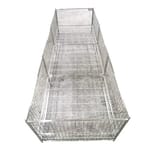
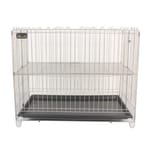
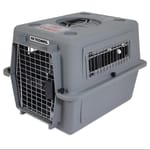
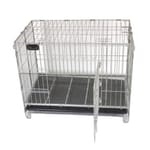
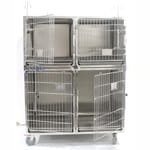
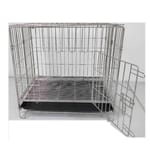
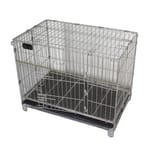
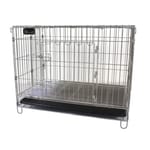
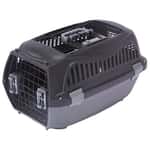
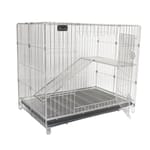
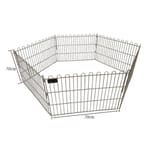
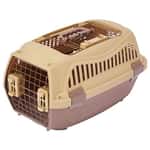
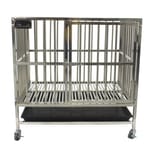
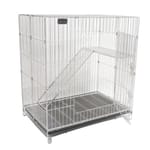
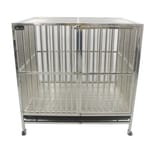
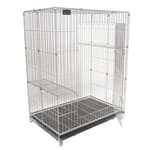
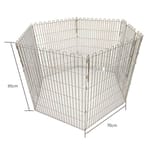
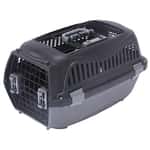
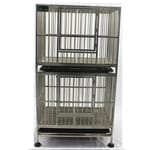
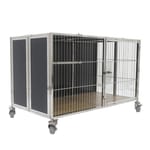
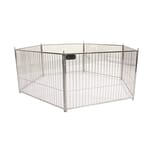
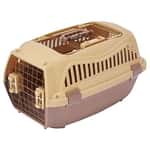
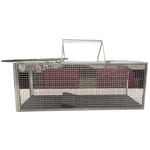
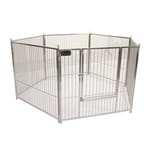
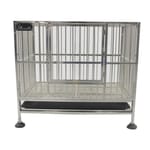
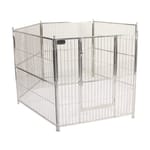
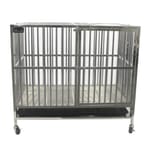
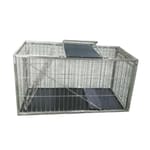
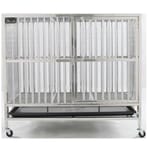
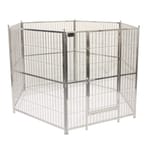
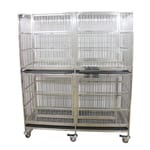
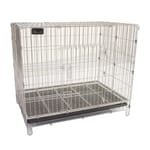
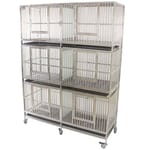
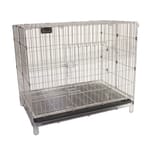
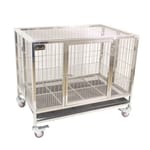
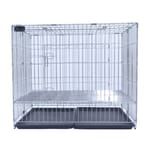
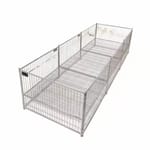
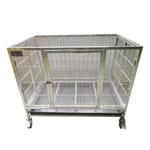
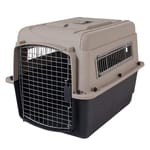
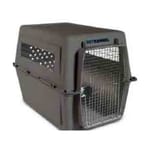
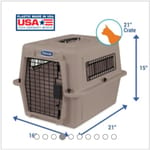
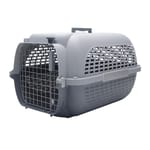
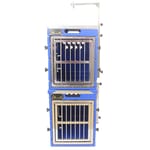
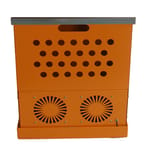
This category features various containment products designed for temporary housing or transportation of animals, primarily including cat carriers, dog crates, and airline-approved pet carriers. These carriers are designed with consideration for the animal's size, habits, and safety requirements, utilizing diverse materials such as plastic, metal mesh, or composite materials. Their structures typically incorporate ventilation openings, robust latches, and handles. Some models specifically comply with the International Air Transport Association (IATA) regulations for pet air transportation, ensuring safety and comfort during extended travel. Different sized carriers are suitable for various types of cats and dogs, addressing needs for short outings, home isolation, training, or long-distance journeys. When selecting, it is important to consider the carrier's stability, ventilation, and whether it provides sufficient space for the animal to stand, turn around, and lie down comfortably, such as the crucial aspect of dog crate size selection. These products offer pets a protected, independent space, facilitating management and movement.
Pet carriers, including those suitable for cats and dogs, are enclosures designed for the temporary containment and transport of animals.
This article aims to describe the structural attributes, material composition, and usage context of pet carriers, without making product recommendations or offering selection advice.
Pet Carrier Classification and Usage Contexts
Pet carriers are commonly segmented based on their intended primary application, which often dictates their construction and material specifications. A fundamental division exists between general-purpose pet carriers and specialized airline-approved pet carriers. General-purpose carriers are typically utilized for local transport, such as veterinary visits, short car journeys, or temporary confinement within a home environment. These carriers prioritize ease of handling, portability, and adequate ventilation for short durations. Their design often incorporates features that facilitate cleaning and storage. Conversely, airline-approved pet carriers are engineered to meet stringent regulatory requirements set forth by aviation authorities and individual airlines for animal transport in cargo holds or as carry-on items. The design parameters for these specific pet carriers are governed by international standards, such as those established by the International Air Transport Association (IATA), which address aspects like material strength, ventilation, leak-proof bottoms, and secure locking mechanisms. The structural integrity and material choices for airline-approved pet carriers are thus significantly more robust than those for general-purpose models, reflecting the demands of air travel and the safety of the animal during transit. Further classification within these broad categories can occur based on the animal's size, with carriers being designated for small, medium, or large pets, influencing overall dimensions and structural reinforcement. Another differentiating factor can be the intended duration of confinement; short-term carriers may have simpler designs, while those for longer periods might incorporate features like feeding ports or increased interior space. The classification of pet carriers is therefore directly linked to their functional purpose and the specific environment in which they are deployed.
Pet Carrier Material Composition and Structural Forms
The material composition and structural forms of pet carriers vary considerably, directly influencing their durability, weight, and suitability for different applications. Common materials for pet carriers include various plastics, wire mesh, and soft-sided fabrics. Plastic pet carriers, often constructed from high-density polyethylene (HDPE) or polypropylene (PP), are prevalent due to their rigidity, ease of cleaning, and resistance to impact. These plastic carriers typically feature a two-part shell design, with a top and bottom section secured by screws, latches, or both. Ventilation is provided through multiple openings or grated side panels, which are often integral to the molded plastic structure. Wire mesh pet carriers, frequently made from steel or aluminum, offer superior ventilation and visibility. Their construction involves welded or woven metal grids, sometimes coated with a rust-resistant finish. These carriers often have a collapsible design, facilitating storage when not in use. Soft-sided pet carriers are generally fabricated from durable fabrics such as nylon, polyester, or canvas, sometimes reinforced with internal wire frames or rigid panels to maintain shape. They are characterized by their lighter weight and flexibility, often featuring zippered openings and mesh windows. The choice of material directly affects the pet carrier's structural form, with rigid plastics allowing for stacked designs and integrated features, wire allowing for open-air construction, and fabrics enabling more compressible and adaptable shapes. The manufacturing process for plastic pet carriers typically involves injection molding, producing consistent and strong components. Wire carriers involve welding and bending processes, while soft-sided carriers rely on cutting, stitching, and assembly of fabric and frame elements. These differing material and manufacturing approaches result in a diverse range of pet carrier types, each with distinct characteristics regarding strength, portability, and environmental resilience.
Pet Carrier Properties Across Different Usage Environments
The properties of a pet carrier exhibit variations depending on the specific usage environment and conditions it is designed to withstand. For example, a pet carrier intended for indoor use or short-distance travel might prioritize features such as a lightweight construction and ease of maneuverability. These carriers may utilize less rigid materials or incorporate more fabric components. In contrast, pet carriers designated for outdoor use, particularly those exposed to varying weather conditions, will typically feature materials with enhanced resistance to moisture, UV radiation, and temperature fluctuations. This often translates to the use of weather-resistant plastics or treated metal components. Airline-approved pet carriers represent a distinct category where properties are dictated by rigorous safety and operational standards. These pet carriers must withstand the pressures and temperatures of cargo holds, maintain structural integrity during turbulence, and prevent animal escape. Key properties in this context include impact resistance, secure locking mechanisms that prevent accidental opening, and adequate ventilation that cannot be obstructed. The design must also ensure that the pet carrier is leak-proof, often achieved through raised edges or absorbent pads within the base. Furthermore, the dimensions of pet carriers for air travel are strictly regulated, ensuring they fit within designated cargo spaces or under seats for cabin travel. The choice of materials for an airline-approved pet carrier is therefore critical, often involving high-strength plastics or reinforced metal frames to meet these demands. The environment of a vehicle, such as a car, imposes another set of considerations for pet carriers. Here, properties like stability, the ability to be secured with seat belts, and impact absorption are relevant. Some pet carriers are designed with specific anchoring points or non-slip bases to enhance safety during vehicle transport. Thus, the operational environment directly dictates the necessary physical and structural properties of the pet carrier, from material selection to specific design features. Understanding the variations in pet carrier properties across different usage environments is essential for comprehending the design principles behind each type.
Pet Carrier Product Characteristics Based on Sales Ranking
Based on the provided sales ranking, an analysis of the material and structural characteristics of these pet carriers can be performed. This section focuses solely on objective product attributes.
Rank 1: Extra Large Pet Carrier for Cats and Dogs, Random Color (L85cm*W60cm*H70cm) — This pet carrier is characterized by its substantial dimensions, indicating suitability for larger animals or multiple smaller animals. The term "Random Color" suggests that the external finish is not a primary distinguishing feature in its manufacturing or marketing, implying a focus on functionality and size. Given the typical construction of pet carriers in this size range, it is highly probable that this unit is constructed from a hard plastic, such as polypropylene or high-density polyethylene, to provide the necessary structural rigidity and support for its large volume and potential weight capacity. The structure would likely involve a two-part shell design, with a secure fastening system to join the top and bottom halves. Ventilation would be provided through integrated vents or wire grilles on multiple sides. A metal wire door, typically spring-loaded or secured with latches, would be a standard feature, offering both security and airflow. The "pet carrier" designation implies a portable enclosure, suggesting the presence of a handle or attachment points for straps, though for its size, wheels might also be an integrated feature for ease of movement.
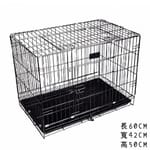
Rank 2: Medium Pet Carrier for Cats and Dogs, Random Color (L61cm*W42cm*H50cm) — This pet carrier falls into the medium size category, indicating its suitability for average-sized cats or small to medium-sized dogs. Similar to the extra-large variant, the "Random Color" descriptor points to a focus on utility over aesthetic customization. The dimensions suggest it is also likely constructed from a durable hard plastic, offering a balance of strength and manageability. The structural form would mirror that of larger hard-sided pet carriers, featuring a two-piece shell and a secure door mechanism. Ventilation is crucial for a pet carrier of this type and would be achieved through multiple integrated vents. The material choice of hard plastic ensures ease of cleaning and resistance to scratches or minor impacts, making it appropriate for routine transport. Handles would be integrated into the top section for carrying. The overall design would prioritize robustness for containing animals of moderate size.
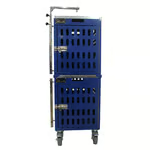
Rank 3: Reinforced Anti-Scratch Double-Door Design Cat Bathing Cage (Small) — This item is specifically designed as a bathing cage for cats, highlighting a specialized functional purpose rather than general transport. The "Reinforced Anti-Scratch" attribute suggests the use of materials or coatings that resist damage from feline claws, likely a metal wire construction with a durable, possibly powder-coated, finish. The "Double-Door Design" indicates two access points, which can facilitate easier placement and removal of the animal, particularly in a bathing context. The term "cage" implies a more open, possibly entirely wire-mesh structure, which would allow water to drain easily and facilitate washing. The "Small" designation refers to its dimensions, suitable for individual cats. The material would be chosen for its water resistance and ease of sanitation, likely stainless steel or galvanized steel with a protective coating to prevent corrosion. The structural form would be a rigid, possibly collapsible, wire framework, designed for secure containment while allowing water flow and quick drying.
Rank 4: Reinforced Anti-Scratch Double-Door Design Cat Bathing Cage (Large) — This larger version of the cat bathing cage shares the same specialized functional purpose and design attributes as its smaller counterpart. The "Reinforced Anti-Scratch" and "Double-Door Design" features remain consistent, indicating a focus on durability against cat claws and enhanced accessibility. The primary difference lies in its increased dimensions, denoted by "Large," making it suitable for larger cat breeds or potentially for holding two smaller cats during bathing. The material composition would be identical: a durable, water-resistant metal wire, likely with a protective coating to prevent rust and provide scratch resistance. The structural form would be a larger iteration of the wire cage design, ensuring secure containment and efficient water drainage. The construction would prioritize stability and ease of cleaning, essential for its intended use as a bathing enclosure. This pet carrier is not intended for travel but for a specific grooming activity.
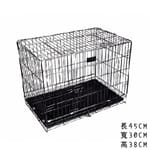
Rank 5: Small Pet Carrier for Cats and Dogs, Random Color (L50cm*W32cm*H38cm) — This pet carrier is the smallest among the general-purpose carriers listed, suitable for very small dogs, puppies, or kittens. Like the other general-purpose pet carriers, the "Random Color" description suggests a focus on practical functionality. Its compact dimensions make it highly portable. The material is expected to be a hard plastic, such as polypropylene, providing a rigid and secure enclosure. The manufacturing process for such a pet carrier would involve injection molding for the main body and possibly a wire or plastic grid for the door. Ventilation would be provided through molded-in slots or a grille on the door. The structural form would be a compact, two-part hard-sided shell, designed for easy carrying with an integrated handle. This pet carrier prioritizes lightweight construction and manageability for frequent, short-distance transport of small animals.
Pet Carrier Quality Standards and Labeling Norms
The quality standards and labeling norms for pet carriers are primarily driven by safety considerations for the animal and, particularly for air travel, by regulatory compliance. For airline-approved pet carriers, the International Air Transport Association (IATA) sets forth comprehensive guidelines that dictate minimum requirements for design, construction, and ventilation. These IATA guidelines, often referenced as LAR (Live Animal Regulations), specify criteria such as the pet carrier's material strength, ensuring it can withstand the rigors of handling and transport. They also detail ventilation area requirements, usually mandating openings on at least three sides for cargo hold travel, with specific dimensions relative to the pet carrier's overall size. The bottom of an IATA-compliant pet carrier must be solid and leak-proof, often with a rim or absorbent material to contain spills. Fasteners used to secure the pet carrier's components must be robust and resistant to accidental opening. Labeling on such pet carriers is also standardized, requiring "LIVE ANIMAL" stickers, directional arrows indicating the upright position, and information about the animal inside, including feeding instructions and contact details. These labeling norms ensure that ground staff and handlers are aware of the contents and can provide appropriate care. Beyond IATA, national and regional regulations may impose additional or specific requirements for pet carriers, particularly concerning animal welfare during transport. For general-purpose pet carriers, while less stringently regulated than airline models, manufacturers often adhere to internal quality control standards regarding material durability, joint strength, and ergonomic design. Labeling for these pet carriers typically includes size specifications, material composition, and sometimes weight limits. Transparency in labeling is crucial, providing verifiable information about the pet carrier's dimensions, construction materials (e.g., "made from durable plastic"), and any certifications it may hold. Documentation norms for pet carriers can include instruction manuals detailing assembly, cleaning, and proper use, particularly for multi-component or collapsible models. For products intended for sale in specific markets, compliance with local safety standards, such as those for plastics or metal coatings, may also be indicated on the labeling. The adherence to these standards and clear labeling practices provides objective information regarding a pet carrier's characteristics and its suitability for various applications.
Verifiable Factual Insights into Pet Carriers
A verifiable factual insight concerning pet carriers relates to the specific material properties required for thermal regulation during air transport. The color of an airline-approved pet carrier can influence its internal temperature when exposed to varying ambient conditions. Darker colored pet carriers absorb more solar radiation, potentially leading to higher internal temperatures, especially when exposed to direct sunlight during tarmac transfers. Conversely, lighter-colored pet carriers reflect more solar radiation, which can contribute to maintaining a cooler internal environment. This is a practical consideration for airlines and pet owners, leading some regulations or recommendations to suggest lighter colors for pet carriers used in cargo holds. Another verifiable factual insight pertains to the structural requirement for airline-approved pet carriers to prevent escape. Most IATA-compliant pet carriers feature doors constructed of metal wire or strong plastic grids, secured by spring-loaded latches or bolted mechanisms. A common requirement is that the door pins must extend beyond the horizontal extrusions by a specified margin, typically 1.6 cm, to prevent the door from being pushed inwards or outwards by the animal. Furthermore, the pet carrier must be constructed in such a way that the animal cannot chew or scratch its way out, mandating robust and non-toxic materials for all internal and external components. These structural details are not merely design choices but are prescribed by international standards to ensure the safety and containment of the animal during transit, highlighting the engineering considerations behind pet carrier construction.
The preceding text has provided a detailed examination of pet carriers, focusing on their classification, material composition, structural attributes, and relevant standards. The information presented is objective and verifiable, describing the characteristics of these enclosures without offering purchasing advice or product comparisons.
......View All