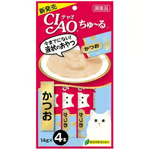
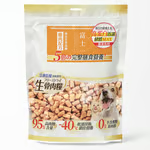
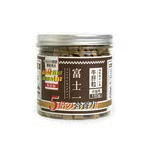
Discover a diverse range of cat treats and pet snacks designed to delight your feline companion. This category features high-quality cat treats, catering to kittens and adult cats alike. Explore popular brands such as CIAO cat treats and Temptations cat treats, known for their freshness and deliciousness. From freeze-dried options to creamy purees and dental snacks, all products are crafted from natural ingredients, free from artificial colors or preservatives. These treats are intended to support your cat’s health and enrich their daily life. Choose the perfect cat treats to make every reward moment special and enjoyable.
The domain of cat treats represents a multifaceted segment within companion animal nutrition, characterized by a diverse array of products designed to supplement a feline's primary diet. Understanding this category necessitates a systematic approach, moving beyond superficial product attributes to grasp the underlying principles of their composition, manufacturing, and intended functional roles. This analytical framework offers insights into the structural variances and conceptual distinctions that define different treat types, thereby enabling a more informed perspective on their place within feline dietary practices.
This exposition specifically aims to delineate the structural understanding of cat treats, focusing on their intrinsic characteristics, formulation methodologies, and classification frameworks. The objective is to provide a comprehensive, knowledge-based overview without venturing into product recommendations, comparative evaluations, or marketing-oriented discourse. The emphasis remains on objective characteristics and the categorical logic that underpins their existence.
Defining and Subdividing the Cat Treats Landscape
The category of cat treats can be broadly defined as supplementary food items intended for intermittent feeding, distinct from a complete and balanced daily diet. Their classification often commences with their physical form and manufacturing process. Within this expansive domain, several primary subdivisions emerge, each possessing distinct structural and compositional attributes. One fundamental distinction lies between soft, chewy treats and hard, crunchy varieties. Soft treats frequently incorporate humectants and emulsifiers to maintain their pliable texture, often featuring a higher moisture content compared to their harder counterparts. Crunchy treats, conversely, undergo processes such as baking or extrusion, which reduce moisture significantly, contributing to their brittle consistency. Another significant categorical division pertains to the primary ingredient source, which can range from animal proteins such as poultry, fish, or red meat, to plant-based components, albeit less common as a sole primary ingredient in feline-specific formulations. The origin of the protein source, whether muscle meat, organ meat, or derivatives, contributes substantially to the treat's nutritional profile and processing requirements. Furthermore, the inclusion or exclusion of grain-based fillers represents another axis of classification, impacting both the caloric density and potential allergenicity for certain felines. Understanding these foundational subdivisions is crucial for developing a comprehensive categorical understanding of cat treats.
Formulation Principles and Structural Differences in Cat Treats
The formulation principles governing cat treats are diverse, reflecting varying design objectives and material characteristics. A core aspect involves the selection of raw materials, which dictates the fundamental nutritional and textural properties. Protein sources, for instance, can be derived from fresh meat, meat meals, or hydrolysates. Fresh meat, while providing high palatability, necessitates specific processing to ensure stability and microbial safety. Meat meals, which are rendered products, offer a concentrated protein source with reduced moisture content, simplifying storage and handling. Hydrolyzed proteins, often used in specialized formulations, involve enzymatic breakdown, potentially reducing allergenicity. The fat content in cat treats is another critical formulation parameter, influencing both energy density and palatability. Fats can originate from animal sources, such as chicken fat or fish oil, or from plant sources, like sunflower oil, each contributing different fatty acid profiles. Carbohydrate sources, such as starches from potatoes, peas, or grains, function as binders, textural agents, and energy contributors, though their inclusion levels can vary considerably across different treat types. The structural integrity of a treat is often achieved through specific processing methods. Extrusion, for example, combines heat, pressure, and shear to create uniform shapes and textures, common in many dry cat treats. Freeze-drying, another method, involves the removal of water through sublimation, preserving the original structure and nutritional content of the raw material, often resulting in a light, porous product. Baking involves dry heat application, leading to a firm and often crispy texture. These various processing techniques inherently contribute to the structural differences observed across the array of available cat treats, influencing their density, friability, and rehydration properties. The presence of specific functional additives, such as prebiotics, probiotics, or dental hygiene compounds, further differentiates formulations, targeting specific physiological outcomes without altering the fundamental structural category of the treat.
Contextual Variation in Cat Treats Under Different Use Scenarios
The application of cat treats exhibits considerable contextual variation, driven by the specific objectives intended for their use, rather than a universal functional equivalence. One primary scenario involves their deployment as training aids. In this context, treats are typically small, easily digestible, and can be administered rapidly and repeatedly without disrupting the cat's caloric intake significantly. The physical size and textural properties of these cat treats are often engineered to facilitate quick consumption, allowing for immediate positive reinforcement during behavioral conditioning. Another common scenario involves their use as a means of enrichment. For this purpose, treats might be incorporated into puzzle feeders or dispensed in novel ways to stimulate a cat's natural foraging instincts. In such instances, the durability or slow-release characteristics of the cat treats can be a relevant attribute, prolonging engagement and mental stimulation. Furthermore, treats are frequently utilized as a vehicle for administering medication, where palatability and ease of concealment for pills or liquids become paramount. The texture and odor of the treat in this scenario are often optimized to mask the presence of medicinal compounds. For cats requiring specific dietary considerations, specialized cat treats might be formulated to align with veterinary recommendations, such as low-calorie options for weight management or single-protein sources for allergy-prone individuals. The frequency of cat treats administration is also a contextual factor, typically recommended to be a small percentage of the cat's total daily caloric intake to prevent nutritional imbalances. These varied use scenarios underscore that the selection of a treat often depends on the specific, intended interaction or functional outcome, rather than an inherent superiority of one type over another. Kitten treats, for example, might be specifically formulated with smaller sizes and softer textures to accommodate developing dentition and digestive systems, reflecting a targeted application.
Objective Presentation of Cat Treats from Product Sales Ranking
This section provides an objective overview of the material, formulation, and structural attributes of specific cat treats identified in sales rankings. The descriptions are strictly factual, devoid of any evaluative or promotional language.
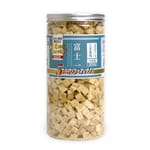
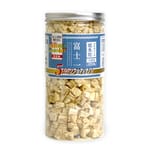
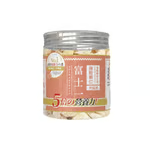
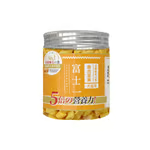
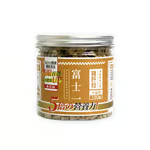
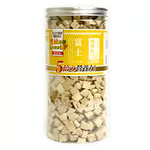
Rank 1: Fujiichi Freeze-Dried Snacks Dehydrated Chicken Cubes 1000g (for cats and dogs) — This product consists of freeze-dried chicken muscle meat, presented in a cuboid form. The manufacturing process involves the removal of water through sublimation, preserving the cellular structure of the chicken. The primary ingredient is chicken, with no additional binders, fillers, or artificial additives reported. The moisture content is typically very low, characteristic of freeze-dried products. The physical structure is porous and lightweight.
Rank 2: Fujiichi Freeze-Dried Snacks Dehydrated Chicken Cubes 300g (for cats and dogs) — Structurally and compositionally identical to the 1000g variant, this product also comprises freeze-dried chicken muscle meat in a cuboid configuration. The primary ingredient is chicken, processed to remove water via sublimation. It does not contain supplementary binders, fillers, or artificial components. The low moisture content and porous structure are inherent features of this freeze-dried formulation of cat treats.
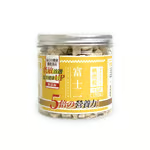
Rank 3: Fujiichi Freeze-Dried Snacks Dehydrated Salmon Cubes 300g (for cats and dogs) — This offering features freeze-dried salmon, presented as cuboid pieces. The processing method is freeze-drying, which dehydrates the salmon while largely retaining its original nutrient profile and structural integrity. The sole ingredient is salmon. This product is characterized by its very low moisture content and a porous, lightweight texture, typical of freeze-dried cat treats. The fatty acid profile is reflective of salmon as a primary ingredient.
Rank 4: Fujiichi Freeze-Dried Snacks Dehydrated Duck Cubes 1000g (for cats and dogs) — Composed of freeze-dried duck muscle meat, this product is formed into cubes. The manufacturing process employs sublimation to remove water, thereby preserving the duck's inherent structure. The ingredient declaration primarily lists duck, with no additional binding agents or synthetic additives mentioned. Its physical characteristics include a low moisture level and a porous, friable texture, common to freeze-dried cat treats.
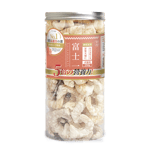
Rank 5: Fujiichi Freeze-Dried Snacks Dehydrated Chicken Breast Slices 1000g (for cats and dogs) — This product consists of freeze-dried chicken breast, presented in a sliced format rather than cubes. The processing methodology is freeze-drying, which extracts moisture through sublimation, maintaining the chicken breast's tissue structure. The sole ingredient is chicken breast. The low moisture content and a light, somewhat fibrous texture are characteristic of this form of freeze-dried cat treats.
Quality Standards, Transparency Frameworks, and Labeling for Cat Treats
The regulatory landscape and industry standards governing cat treats contribute significantly to their structural definition and consumer understanding. In many jurisdictions, cat treats, like other pet food products, are subject to regulations concerning ingredient sourcing, manufacturing practices, and labeling accuracy. Organizations such as the Association of American Feed Control Officials (AAFCO) in the United States provide guidelines and definitions for pet food ingredients and labeling, although they do not possess direct regulatory authority. These guidelines often dictate how ingredients must be listed, requiring them to be presented in descending order by weight. For cat treats, this means the primary protein source or other major components are typically listed first, offering transparency regarding the formulation's foundation. The term "natural" on cat treats, when permitted, often adheres to specific criteria, generally indicating that ingredients are derived from plant, animal, or mined sources and have not undergone chemical alteration, except for processes that are physically or biologically traditional. Conversely, "organic" claims usually require certification from recognized bodies, ensuring ingredients meet specific agricultural and processing standards. The nutritional adequacy statement, commonplace on complete and balanced pet foods, is often absent from treat packaging, as treats are by definition supplementary and not intended to provide a full nutritional profile. However, guaranteed analysis panels, which declare minimum percentages of crude protein and crude fat, and maximum percentages of crude fiber and moisture, are typically mandatory for cat treats. These panels offer objective data on the macronutrient composition. Manufacturing standards, such as Good Manufacturing Practices (GMPs), are also relevant, encompassing facility hygiene, ingredient handling, and process controls to ensure product safety and consistency. The absence of specific terminology, such as "human-grade," unless verifiable through regulatory pathways, also falls under labeling scrutiny. Understanding these frameworks is essential for interpreting the information presented on cat treats packaging and comprehending the underlying quality control mechanisms.
Verifiable Factual Insights into Cat Treats
The manufacturing process of freeze-dried cat treats involves a sophisticated dehydration technique that operates at low temperatures. This method, known as lyophilization, freezes the raw material and then reduces the surrounding pressure to allow the frozen water to sublimate directly from solid ice into water vapor. This direct transition bypasses the liquid phase, which is critical for preserving the cellular structure, original shape, and many heat-sensitive nutrients of the source ingredient, such as various vitamins and amino acids. The resulting product is typically porous, lightweight, and shelf-stable without refrigeration, attributed to its extremely low residual moisture content, which inhibits microbial growth. This is a distinct characteristic differentiating it from air-dried or oven-baked cat treats, which experience higher temperatures and often greater structural alteration.
Another verifiable characteristic pertains to the energy density of different cat treats. Despite their small size, certain formulations of cat treats can possess a concentrated caloric value. For instance, treats with a high fat content or those extensively processed to remove moisture may contribute a disproportionate amount of energy relative to their volume. This is particularly relevant when considering the recommended guidelines that treats should constitute no more than 10% of a cat's daily caloric intake. Over-provision of energy-dense treats can readily lead to an imbalance in the overall diet, potentially impacting a cat's body condition. The precise caloric content is typically determined through bomb calorimetry or calculated based on the modified Atwater factors applied to the guaranteed analysis, providing an objective measure of the energy contribution of a given cat treat.
The category of cat treats is defined by a complex interplay of material science, manufacturing methodologies, and specific functional intentions. A comprehensive understanding requires an analytical approach that dissects their structural attributes, compositional variations, and the contextual factors influencing their application. This framework enables a nuanced appreciation of the diversity within the cat treats market, grounded in objective characteristics and established industry practices.
......View All










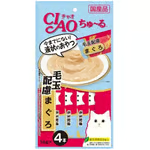

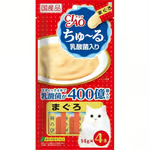

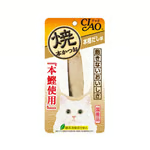
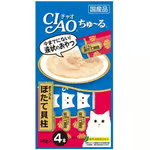
![CIAO CIAO 貓零食 日本燒鰹魚條 25g [干貝口味] 25g 正面圖](https://www.dogchillhk.com/m/609-1636446164-1.jpg)
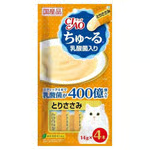
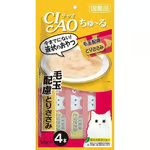
![CIAO CIAO 貓零食 日本燒鰹魚條 鰹魚味 25g [高齡貓用] 25g 貓用 正面圖](https://www.dogchillhk.com/m/5306-1636446503-1.jpg)
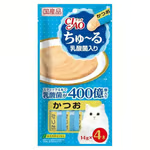
![CIAO CIAO 貓零食 日本燒鰹魚條 25g [正宗高湯味] 25g 正面圖](https://www.dogchillhk.com/m/611-1654658388-1.jpg)