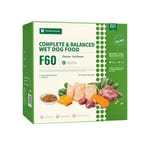
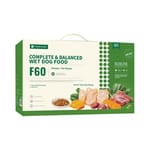
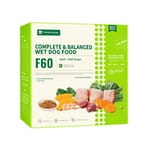
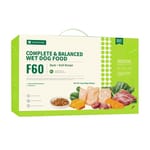
FOOD CHAIN dog wet food refers to canned food products formulated for canines, typically presented in sealed containers. These products are designed to provide essential daily nutrition for dogs, often containing a mix of meats, vegetables, grains, and various nutritional supplements. FOOD CHAIN dog wet food offers a range of formulations to cater to diverse dietary requirements of different dogs, including specific recipes for puppies, adult dogs, or senior dogs, as well as nutritional blends addressing particular health considerations. The products come in various textures and flavors to ensure palatability for dogs. These dog wet food options can be served as a complete meal or mixed with dry kibble, offering a balanced dietary choice for canines. Some products may also be developed alongside other pet food lines, such as 'food chain cat food', to meet the needs of various pets.
Wet dog food, often referred to as canned dog food, constitutes a significant segment of the pet nutrition industry, characterized by its moisture content and typically hermetically sealed packaging.
This article aims to describe the structural attributes, material composition, and usage context within the category of wet dog food. It does not seek to recommend specific products or provide comparative analysis of advantages.
Wet Dog Food: Common Divisions and Classifications
The classification of wet dog food in practical and supply contexts typically involves several primary distinctions based on formulation, intended life stage, and ingredient sourcing. One fundamental division separates complete and balanced formulas from complementary or supplemental wet dog food. Complete and balanced products are designed to provide all necessary nutrients for a dog's daily requirements when fed as directed, adhering to standards set by regulatory bodies such as the Association of American Feed Control Officials (AAFCO) in the United States or the European Pet Food Industry Federation (FEDIAF) in Europe. Conversely, complementary wet dog food is formulated to be fed alongside other foods, often as a treat or an appetite stimulant, and does not inherently offer a full nutritional profile on its own. Further classification often occurs by the dog's life stage, including formulas specifically for puppies, adult dogs, senior dogs, and sometimes formulas tailored for specific physiological conditions or activity levels. Another common division relates to the form factor and texture, ranging from pâtés and ground textures to chunks in gravy or jelly, and shredded meat preparations. The primary protein source, such as chicken, beef, lamb, or fish, also serves as a common classification criterion, often highlighted on product labels. Specialized categories like grain-free, limited ingredient diets, or those targeting specific dietary sensitivities also represent distinct segments within the wet dog food market, providing options for various canine needs and owner preferences. These divisions facilitate consumer navigation and allow manufacturers to target specific market niches within the broad category of wet dog food.
Wet Dog Food: Material Composition and Processing Techniques
The material composition of wet dog food is primarily characterized by its high moisture content, typically ranging from 70% to 85%, distinguishing it significantly from dry kibble. The core ingredients usually include a primary protein source, often meat, poultry, or fish, which provides essential amino acids. These protein sources can be rendered or fresh, and their quality and origin are often specified on ingredient lists. Carbohydrate sources, such as grains (e.g., rice, oats, barley) or legumes (e.g., peas, lentils, potatoes), are frequently incorporated to provide energy and fiber. Some formulations, labeled as grain-free, substitute traditional grains with other carbohydrate sources to cater to specific dietary requirements or preferences. Fats, derived from animal sources (e.g., chicken fat, beef tallow) or plant sources (e.g., flaxseed oil, sunflower oil), are crucial for energy, fatty acids, and vitamin absorption. Vitamins and minerals, often in the form of pre-mixes, are added to ensure the product meets complete and balanced nutritional standards. Fiber sources, such as beet pulp or various vegetable fibers, contribute to digestive health. Additional ingredients may include thickeners (e.g., carrageenan, guar gum), palatability enhancers, and antioxidants to preserve freshness. The processing of wet dog food typically involves several key steps. Ingredients are first mixed according to a specific formulation. This mixture is then often cooked, usually via a process of retorting. Retorting involves heating the product in its sealed container under high pressure and temperature, which sterilizes the food, eliminating harmful microorganisms and extending its shelf life without the need for refrigeration until opened. This thermal processing also contributes to the distinct texture and palatability of wet dog food. The exact temperature and duration of retorting vary based on the product's composition and container size, ensuring food safety and stability. Some premium or specialized wet dog food products may utilize alternative processing methods like sous-vide or gentle cooking at lower temperatures to preserve nutrient integrity and texture, though these are less common for mass-produced canned varieties. The structural forms can range from finely ground pâtés, which are homogeneous mixtures, to chunky stews featuring discernible pieces of meat and vegetables suspended in gravy or jelly. The consistency and appearance are largely determined by the type of grinding, cutting, and the inclusion of thickening agents during preparation, impacting the overall presentation of the wet dog food.
Wet Dog Food: Usage Environments and Conditions
The characteristics of wet dog food can vary significantly depending on the intended usage environments and specific conditions. Its high moisture content is a primary feature that influences its suitability for certain contexts. In environments where a dog's water intake may be suboptimal, such as during travel or for animals with certain medical conditions, wet dog food can contribute substantially to hydration. The palatability of wet dog food is generally higher than that of dry kibble, making it a preferred option for dogs with reduced appetites, senior dogs, or those recovering from illness. This increased palatability can also be beneficial in situations where medication needs to be administered, as the strong aroma and texture can mask the presence of pills or supplements. However, the storage and handling of wet dog food are more stringent compared to dry formulations. Once opened, wet dog food requires refrigeration and should be consumed within a specified timeframe, typically 2-3 days, to prevent spoilage. This characteristic makes it less suitable for free-feeding or for extended periods in warm climates without proper storage. For outdoor or working dogs requiring immediate energy, the density of calories per volume in some wet dog food formulations might be lower than in dry foods, necessitating larger meal portions. The packaging, typically cans or pouches, offers a hermetic seal that protects the contents from oxidation and microbial contamination until opened, providing a long shelf life at ambient temperatures. This makes it a practical option for emergency preparedness kits or situations where refrigeration is intermittently available prior to opening. The texture variations, from smooth pâtés to chunky preparations, cater to different canine preferences and dental conditions. For instance, dogs with dental issues may find softer wet dog food easier to consume than hard kibble. The specific environmental conditions, such as temperature and humidity, dictate the necessary storage protocols for wet dog food to maintain its integrity and safety after opening.
Wet Dog Food: Product Characteristics from Sales Ranking
Based on the provided sales ranking, the following describes the material, formulation, and structural characteristics of the top products within the wet dog food category.
Rank 1: FOOD CHAIN F60 Adult Dog Complete Nutrition Low-Temperature Fresh Cooked Main Food Chicken + Tuna 100g 6-Pack (fc90610) — This product is formulated as a complete nutrition main food for adult dogs. The primary protein sources are specified as chicken and tuna, indicating a combination of poultry and fish ingredients. The description "Low-Temperature Fresh Cooked" suggests a processing method designed to minimize nutrient degradation often associated with higher temperature sterilization, potentially implying a focus on ingredient integrity and digestibility. The product is packaged in 100g units, sold in a 6-pack configuration, indicating single-serving or portion-controlled packaging. The texture is not explicitly stated but is implied to be a form suitable for a "fresh cooked" preparation.
Rank 2: FOOD CHAIN F60 Adult Dog Complete Nutrition Low-Temperature Fresh Cooked Main Food Chicken + Tuna 100g 30-Pack (fc90351) — This product shares identical material and formulation characteristics with the Rank 1 product. It is also an adult dog complete nutrition main food featuring chicken and tuna as primary proteins, processed via a low-temperature fresh cooked method. The distinction lies solely in the packaging quantity, offered as a 30-pack of 100g units. This larger pack size caters to consumers seeking bulk purchasing options for the same wet dog food formulation.
Rank 3: FOOD CHAIN F60 Adult Dog Complete Nutrition Low-Temperature Fresh Cooked Main Food Duck + Krill 100g 6-Pack (fc90627) — This wet dog food is also designed for adult dogs, providing complete nutrition. The protein sources differ from the top two ranked products, featuring duck and krill. Duck represents an alternative poultry protein, while krill introduces a marine-sourced protein and lipid component, potentially contributing omega-3 fatty acids. The "Low-Temperature Fresh Cooked" processing method is consistent with the other ranked products, emphasizing a particular approach to food preparation. It is presented in 100g units within a 6-pack, aligning with the smaller packaging configuration.
Rank 4: FOOD CHAIN F60 Adult Dog Complete Nutrition Low-Temperature Fresh Cooked Main Food Duck + Krill 100g 30-Pack (fc90375) — This product is identical in formulation and material composition to the Rank 3 product. It is an adult dog complete nutrition main food with duck and krill as primary ingredients, using the low-temperature fresh cooked method. The only differentiating factor is the packaging format, offered as a 30-pack of 100g units, providing a larger bulk option for this specific wet dog food flavor.
Wet Dog Food: Quality Standards and Labeling Norms
The quality standards and labeling transparency for wet dog food are governed by regulatory bodies and industry associations to ensure product safety, nutritional adequacy, and accurate consumer information. In the United States, the Association of American Feed Control Officials (AAFCO) sets definitions for ingredients, establishes nutritional requirements for different life stages, and provides model regulations that most states adopt. Products labeled as "complete and balanced" wet dog food must meet AAFCO nutrient profiles, either through formulation to a specific profile or by passing feeding trials. The ingredient list on wet dog food packaging is mandated to be in descending order by weight, providing transparency regarding the primary components. Ingredients must be identified by their common or usual name. For instance, "chicken" must refer to chicken meat, not a byproduct, unless specified. Nutritional adequacy statements are crucial, indicating for which life stage (e.g., "for growth," "for maintenance," or "for all life stages") the wet dog food is formulated and by what method (e.g., "formulated to meet AAFCO requirements" or "animal feeding tests substantiate..."). Guaranteed analysis provides minimum percentages for crude protein and crude fat, and maximum percentages for crude fiber and moisture, enabling consumers to compare nutrient concentrations. Manufacturers are also required to provide feeding guidelines, which are typically presented as a range based on a dog's weight. Date codes, such as "best by" or "manufactured on" dates, are essential for tracking product freshness and shelf life. For wet dog food produced in Europe, the European Pet Food Industry Federation (FEDIAF) provides similar guidelines and nutritional standards. FEDIAF's Nutritional Guidelines for Complete and Complementary Pet Food define nutrient requirements and provide guidance on ingredient declarations and labeling. Beyond these regulatory requirements, some manufacturers adhere to additional voluntary certifications or standards, such as those for organic ingredients, non-GMO status, or sustainable sourcing, which are often communicated through specific labels or seals on the wet dog food packaging. Traceability systems are also implemented by many manufacturers, allowing for the tracking of ingredients from source to finished product, enhancing accountability and facilitating recall procedures if necessary. The presence of a clear manufacturer or distributor contact information is also a standard labeling norm, allowing consumers to address inquiries or report issues concerning the wet dog food.
Wet Dog Food: Verifiable Factual Insights
A verifiable factual insight regarding wet dog food is its contribution to a dog's overall hydration. Due to its high moisture content, typically between 70% and 85%, feeding wet dog food can substantially increase a dog's daily water intake compared to feeding only dry kibble, which generally contains less than 10% moisture. This characteristic is particularly relevant for dogs that naturally drink less water or those with certain urinary tract conditions where increased hydration is beneficial. Another verifiable insight concerns the thermal processing method used for most commercially produced wet dog food. The canning process, which involves sealing the food in airtight containers and then sterilizing it under high heat and pressure (retorting), results in a product with a significantly extended shelf life at ambient temperatures. This processing method eliminates pathogenic bacteria and spoilage microorganisms, making the wet dog food shelf-stable for months or even years before opening, without the need for chemical preservatives commonly found in other food products. This specific characteristic of wet dog food ensures its safety and stability over long periods, distinguishing it from fresh or refrigerated pet food options.
The information presented provides an overview of the structural and characteristic attributes of wet dog food. It details common classifications, material compositions, processing techniques, and relevant quality standards. No recommendations or comparative evaluations have been provided.
......View All