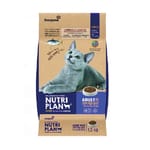
Nutriplan cat food offers various formula options designed to meet the daily nutritional needs of felines. This category encompasses dry food products with different flavors, textures, and life stage suitability. The Nutriplan cat food product line typically includes diverse protein sources, taking into account specific dietary preferences or requirements of cats. Among numerous cat food brands, this category showcases the options Nutriplan provides for feline meals. Consumers can select from the diverse products within the Nutriplan cat food range, such as formulas designed for adult cats, based on their cat's age, activity level, or reaction to specific ingredients. Products in this category are usually sold in packaged forms and include clear ingredient lists and feeding guidelines to assist owners in providing a balanced diet for their cats.
Nutriplan Cat Food refers to a specific range of feline nutritional products formulated for domestic cats, characterized by their composition of processed ingredients designed to meet dietary requirements.
This article aims to describe the structural attributes, material composition, and usage contexts within the Nutriplan Cat Food category. It does not provide recommendations for purchase or offer selection advice.
Nutriplan Cat Food Classification and Usage Context
The Nutriplan Cat Food category is commonly divided based on the life stage of the feline, which dictates distinct nutritional profiles. Primary classifications include formulations for kittens, adult cats, and senior cats. Kitten formulations typically feature higher caloric density and increased protein levels to support rapid growth and development. Adult cat formulations are designed for maintenance, balancing energy intake with activity levels to prevent obesity while providing essential nutrients. Senior cat formulations often incorporate ingredients aimed at supporting joint health, kidney function, and cognitive vitality, reflecting the specific physiological changes associated with aging. Another common division within the Nutriplan Cat Food range is based on specific dietary needs or sensitivities, such as grain-free options or formulations targeting digestive health. These specialized products address prevalent feline dietary concerns, offering alternatives to standard recipes. Furthermore, the physical form of the food, primarily dry kibble versus wet canned food, represents another significant classification. Dry kibble offers convenience and dental benefits, while wet food provides higher moisture content, which can be beneficial for hydration. The packaging size is also a practical classification criterion, with smaller bags catering to single-cat households or trial purchases and larger bags offering bulk value for multi-cat environments or long-term feeding. Each classification serves to align the product with a specific consumer need or pet demographic, structuring the availability of Nutriplan Cat Food in the market.
Nutriplan Cat Food: Material Composition and Processing Techniques
The material composition of Nutriplan Cat Food is fundamentally centered on providing a complete and balanced diet for felines, adhering to established nutritional guidelines. Protein sources typically include animal-derived ingredients such as chicken, lamb, fish (like tuna), and beef, which supply essential amino acids. Carbohydrate components often consist of grains like corn, rice, or barley in standard formulations, providing energy. In grain-free variations of Nutriplan Cat Food, alternative carbohydrate sources such as peas, potatoes, or lentils are utilized. Fats, crucial for energy, skin, and coat health, are incorporated through ingredients like animal fat, fish oil, or vegetable oils. Vitamins and minerals are added to ensure comprehensive nutritional coverage, often in the form of pre-mixes. Fiber sources, such as beet pulp or cellulose, aid in digestive health. The structural forms of Nutriplan Cat Food primarily encompass dry kibble and wet canned food. Dry kibble is produced through an extrusion process where ingredients are mixed, cooked under high pressure and temperature, then forced through a die to create uniform shapes. These shapes are then dried and coated with palatants and fats. This process results in a low-moisture, shelf-stable product. Wet canned food involves combining ingredients, cooking them, and then sealing them in cans, followed by a sterilization process to ensure safety and extend shelf life. The texture of wet food can vary from pâtés to chunky formulations in gravy or jelly. Formulation methods for Nutriplan Cat Food involve precise calculations to meet specific nutrient profiles, often guided by standards set by regulatory bodies. Ingredient selection prioritizes digestibility and bioavailability for cats. Quality control measures are implemented throughout the manufacturing process, from raw material inspection to final product testing, to ensure consistency and safety. The specific processing techniques applied to different Nutriplan Cat Food products contribute to their final texture, palatability, and nutritional integrity.
Nutriplan Cat Food Properties Across Usage Environments
The properties of Nutriplan Cat Food can manifest differently depending on the specific usage environment or conditions. For instance, dry kibble, due to its low moisture content, offers distinct advantages in terms of storage and handling. It is less susceptible to spoilage in open air compared to wet food and can be left in a feeder for extended periods without significant degradation, making it suitable for environments where frequent feeding is not practical. Conversely, wet Nutriplan Cat Food, with its high moisture content, contributes significantly to a cat's hydration, which is particularly beneficial in environments where water intake might be suboptimal or for cats with certain urinary tract health considerations. However, once opened, wet food requires refrigeration and has a shorter shelf life, necessitating prompt consumption or disposal to prevent bacterial growth. The palatability of Nutriplan Cat Food can also be influenced by environmental factors such as temperature. Some cats may exhibit a preference for food served at room temperature, and wet food can be gently warmed to enhance its aroma and appeal. In contrast, dry kibble maintains a more consistent texture and aroma across a wider range of ambient temperatures. For multi-cat households, the structural form of Nutriplan Cat Food can impact feeding dynamics. Dry kibble allows for free-feeding, whereas wet food typically requires portion control and supervised feeding to ensure equitable distribution and prevent resource guarding. The overall stability of Nutriplan Cat Food, particularly its nutrient integrity, is also affected by storage conditions. Proper storage in cool, dry places away from direct sunlight is crucial for both dry and wet forms to prevent nutrient degradation and maintain freshness. Environmental humidity can affect the texture of dry kibble, potentially leading to softening or mold growth if not stored correctly. These variations in properties highlight the importance of considering the specific context in which Nutriplan Cat Food is utilized.
Nutriplan Cat Food Product Characteristics Based on Sales Ranking
The following descriptions detail the material, formulation, and structural characteristics of Nutriplan Cat Food products, based on their sales ranking. This information is presented without any recommendation or comparative evaluation.
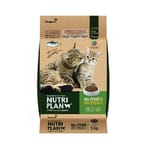
Rank 1: Nutriplan Cat Food Nutrition Plan All-Round Health Nutrition Formula 5kg – This product is a dry kibble formulation designed to provide comprehensive nutritional support for adult cats. Its composition typically includes a blend of animal proteins, grains as carbohydrate sources, and a fortified mix of vitamins and minerals. The term "All-Round Health Nutrition Formula" indicates a balanced nutrient profile intended to support general well-being, including aspects like coat health, digestion, and energy levels. The 5kg packaging size suggests suitability for regular feeding in multi-cat households or for owners seeking larger quantities. The kibble pieces are uniformly shaped, characteristic of extruded dry pet food.
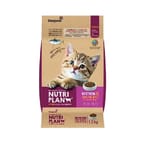
Rank 2: Nutriplan Cat Food Nutrition Plan Kitten Nutrition Formula 1.5kg – This is a dry kibble specifically formulated for the nutritional needs of growing kittens. Its material composition is adjusted to provide higher levels of protein and fat to support rapid growth, muscle development, and energy demands characteristic of the kitten life stage. Essential fatty acids, such as DHA, are often included to support brain and vision development. The kibble size is typically smaller than adult formulations, facilitating easier consumption by young cats. The 1.5kg package is a standard size for initial feeding periods for kittens.
Rank 3: Nutriplan Cat Food Nutrition Plan Adult Cat Nutrition Formula 1.5kg – This product is a dry kibble designed for the maintenance of adult cats. Its formulation aims to provide a balanced diet that supports daily energy requirements and maintains optimal body condition. The protein and fat levels are typically moderate, suitable for adult cats with average activity levels. The ingredient list would include common animal protein sources, carbohydrate sources, and a vitamin-mineral blend. The 1.5kg packaging size is commonly used for single-cat households or for introductory purposes. The kibble possesses a consistent texture and shape, typical of extruded dry Nutriplan Cat Food.
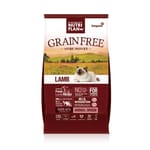
Rank 4: Nutriplan Cat Food Nutrition Plan Korean Grain-Free Hypoallergenic Formula Lamb 2kg – This product is a dry kibble formulation characterized by its grain-free and hypoallergenic attributes, specifically utilizing lamb as the primary animal protein source. The absence of common grains like corn, wheat, and soy is intended to reduce potential allergens for sensitive felines. Lamb is often selected for its novel protein status, meaning it is less commonly associated with allergic reactions in cats. The carbohydrate sources in this Nutriplan Cat Food variant would be alternative ingredients such as peas or potatoes. The 2kg packaging indicates a mid-range size option. The kibble is formed through an extrusion process, similar to other dry Nutriplan Cat Food products.
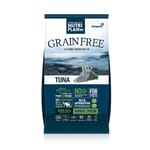
Rank 5: Nutriplan Cat Food Nutrition Plan Korean Grain-Free Hypoallergenic Formula Tuna 2kg – Similar to the lamb variant, this is a dry kibble that is grain-free and formulated for hypoallergenic properties, but with tuna as the main animal protein. Tuna provides an alternative protein source for cats with sensitivities to more common meats. The formulation excludes typical grain-based carbohydrates, substituting them with ingredients like legumes or root vegetables. This Nutriplan Cat Food product is also packaged in a 2kg bag, offering a specialized dietary option for cats requiring a specific protein or avoiding grains. The manufacturing process results in a consistent kibble structure.
Nutriplan Cat Food: Quality Standards and Labeling Norms
The quality standards and labeling norms for Nutriplan Cat Food are governed by regulatory bodies and industry associations to ensure product safety, nutritional adequacy, and consumer transparency. In many regions, pet food manufacturers must adhere to strict guidelines regarding ingredient sourcing, manufacturing processes, and nutrient content. For example, standards often dictate that a product labeled as "complete and balanced" must meet specific nutrient profiles established for a cat's particular life stage, such as those set by the Association of American Feed Control Officials (AAFCO) in the United States, or similar European Union regulations. These profiles specify minimum and maximum levels for proteins, fats, vitamins, and minerals. Labeling transparency for Nutriplan Cat Food requires manufacturers to clearly list all ingredients in descending order by weight, providing consumers with detailed information about the product's composition. This includes specifying the source of protein, carbohydrates, and fats. Guaranteed analysis panels are mandatory, presenting the minimum percentages of crude protein and crude fat, and maximum percentages of crude fiber and moisture. These figures allow for a direct comparison of nutrient density across different products. Manufacturing facilities producing Nutriplan Cat Food are subject to inspections to verify compliance with good manufacturing practices (GMP), which cover aspects such as hygiene, equipment maintenance, and pest control. Documentation norms typically require batch tracking of ingredients and finished products, enabling traceability in case of quality control issues. Claims made on Nutriplan Cat Food packaging, such as "grain-free" or "hypoallergenic," must be substantiated by the manufacturer, often through specific ingredient exclusions or formulation choices. The inclusion of terms like "Nutrition Plan" also implies a deliberate formulation strategy aimed at specific dietary outcomes. These verifiable standards and norms provide a framework for evaluating the integrity and consistency of Nutriplan Cat Food products.
Nutriplan Cat Food: Factual Insights
A notable factual insight regarding the production of Nutriplan Cat Food, and pet food in general, relates to the palatability enhancement process. After the extrusion and drying of dry kibble, a common practice involves applying a coating of fats and palatants. This coating, often a mixture of animal fats, oils, and specially formulated flavor enhancers, is sprayed onto the kibble pieces. The primary function of this step is not directly nutritional, but rather to significantly increase the food's appeal to cats, as felines are highly sensitive to scent and taste. Without this coating, many cats would exhibit reduced interest in consuming dry kibble. This process is a standard element of dry pet food manufacturing, including for Nutriplan Cat Food, to ensure adequate food intake by the target animal. Another verifiable factual insight concerning Nutriplan Cat Food involves the moisture content difference between dry and wet formulations. Dry kibble typically contains between 6% and 10% moisture by weight, while wet canned food can have a moisture content ranging from 70% to 85%. This significant difference directly impacts not only the caloric density per serving but also the contribution of the food to a cat's overall hydration. Consequently, a cat consuming only wet Nutriplan Cat Food will naturally ingest a much larger volume of water through its diet compared to a cat fed solely dry kibble, influencing water bowl consumption and urinary tract health considerations. This fundamental compositional distinction dictates different dietary approaches and storage requirements for each form of Nutriplan Cat Food.
This article has presented an overview of Nutriplan Cat Food, focusing on its structural attributes, material composition, and various classification parameters. The information provided aims to describe the category objectively, without offering any form of endorsement or recommendation.
......View All